
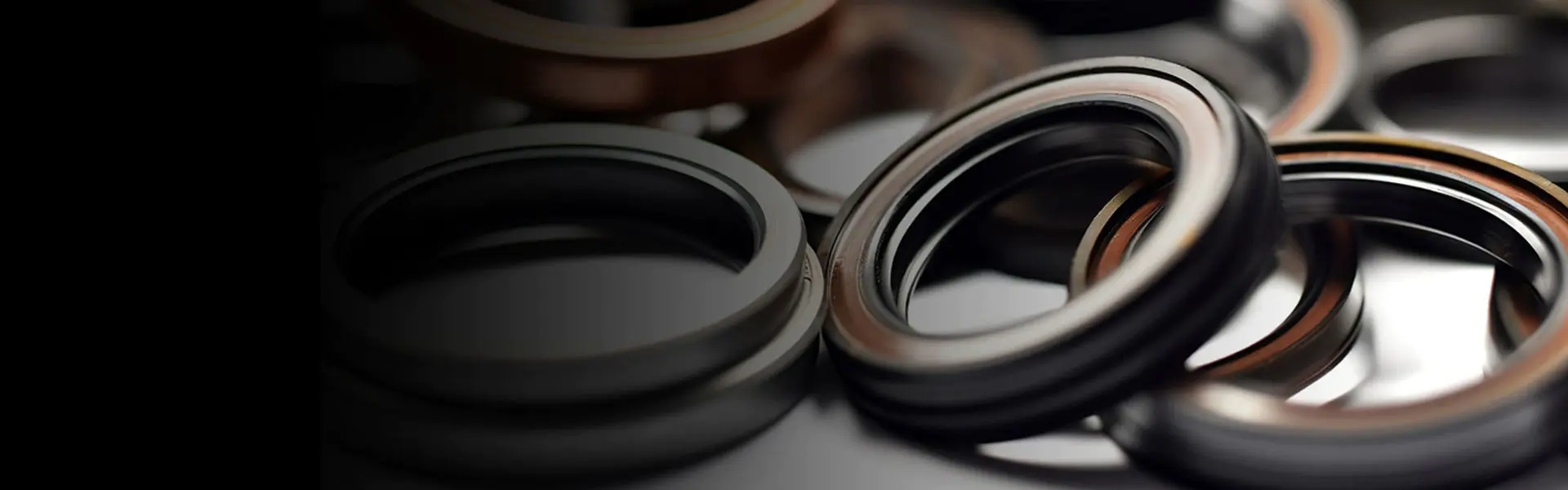
For industrial sealing applications demanding uncompromising chemical resistance, exceptional thermal stability, and long-term reliability, PTFE Gaskets stand as the premier solution. Polytetrafluoroethylene, the advanced polymer from which these gaskets are crafted, offers a nearly universal inertness that makes it indispensable in chemical processing, pharmaceutical, food and beverage, and semiconductor manufacturing. At Kaxite, we engineer our PTFE sealing products to meet the most stringent specifications, ensuring leak-free performance in even the most aggressive service environments. Our commitment extends beyond supply to providing expert technical guidance, helping you select the optimal gasket configuration for your specific pressure, temperature, and media challenges.
The superiority of PTFE gaskets stems from the inherent characteristics of the PTFE polymer itself. Understanding these properties is key to specifying the correct seal.
Kaxite offers a comprehensive range of PTFE gasket types, each designed for specific performance criteria and application demands. Our manufacturing precision ensures consistency and quality in every batch.
Manufactured from 100% pure, unfilled PTFE resin. This is the go-to choice for maximum chemical purity and corrosion resistance.
| Property | Specification (Typical) | Test Method |
|---|---|---|
| Specific Gravity | 2.15 - 2.20 g/cm³ | ASTM D792 |
| Tensile Strength | 25 - 35 MPa (3600 - 5000 psi) | ASTM D638 |
| Elongation at Break | 300 - 500% | ASTM D638 |
| Compression Set (22 hrs @ 25°C) | 40 - 60% | ASTM D395 |
| Thermal Conductivity | 0.25 W/m·K | ASTM C177 |
To enhance mechanical properties for higher pressure applications, Kaxite offers filled PTFE compounds. These materials improve creep resistance and reduce cold flow.
| Filler Type | Key Benefits | Ideal For |
|---|---|---|
| Glass Fiber | Increased compressive strength, improved wear resistance, reduced deformation under load. | High-load static seals, valve seats, pump housings. |
| Carbon/Graphite | Enhanced thermal conductivity, improved creep resistance, lower permeability. | Heat exchanger flanges, high-temperature chemical services. |
| Stainless Steel | Greatly increased rigidity and pressure rating, excellent recovery. | High-pressure piping, aggressive cyclic duty, ASME B16.21 facings. |
| Bronze | Improved thermal conductivity and load-bearing capacity. | General industrial use where enhanced performance over virgin PTFE is needed. |
What are the limitations of virgin PTFE gaskets?
While virgin PTFE has exceptional chemical properties, it is susceptible to "cold flow" or creep under sustained compressive loads. This can lead to a loss of bolt stress and potential leakage over time in high-pressure static seals. For such applications, filled PTFE or reinforced gasket designs (like spiral wound) from Kaxite are recommended.
How do I select the right thickness for a PTFE gasket?
Thickness selection depends on flange type, surface condition, and pressure. For standard raised face flanges, 1.5mm (1/16") is common. For uneven or damaged flange surfaces, a thicker gasket (3mm or 1/8") may be needed to compensate. For high pressure, a thinner gasket is often better to reduce creep area. Kaxite technical support can advise based on your specific parameters.
Can PTFE gaskets be used for steam service?
Yes, PTFE gaskets are suitable for steam service within their temperature rating (up to 260°C / 500°F). For saturated steam lines within this range, they perform well. However, for superheated steam above this temperature, alternative materials like flexible graphite must be considered.
What is the maximum pressure rating for a PTFE gasket?
The pressure rating is not solely a function of the material but of the entire gasket design and flange assembly. Virgin PTFE ring gaskets may be suitable for pressures up to 150-300 psi depending on size and temperature. Reinforced PTFE or PTFE-filled spiral wound gaskets from Kaxite can handle significantly higher pressures, often exceeding 1000 psi. Always consult engineering tables or our team for the specific application.
How do I install and torque a PTFE gasket correctly?
Ensure flanges are clean, aligned, and undamaged. Place the gasket carefully centered. Use lubricated bolts if possible. Follow a cross-pattern tightening sequence in multiple stages (e.g., 30%, 60%, 100% of final torque). The final torque value should be based on the bolt size, grade, and the gasket recommendation. Over-torquing can crush and split PTFE, while under-torquing leads to leakage. Kaxite provides detailed installation guidelines with its products.
Are Kaxite PTFE gaskets suitable for oxygen service?
Yes, but with critical precautions. Virgin PTFE is inherently resistant to oxidation. However, for high-pressure oxygen service, the gaskets must be meticulously cleaned of all organic contaminants (oils, greases) during manufacturing and handled with clean gloves. Kaxite offers specially cleaned and packaged PTFE gaskets for oxygen and other high-purity services.
What is the lead time for custom-sized or non-standard PTFE gaskets?
Kaxite prides itself on rapid response for custom components. For die-cut custom shapes, standard lead times range from 2-5 business days depending on complexity and quantity. For molded or machined specials, our engineering team will provide a firm timeline upon review of your drawing.


