
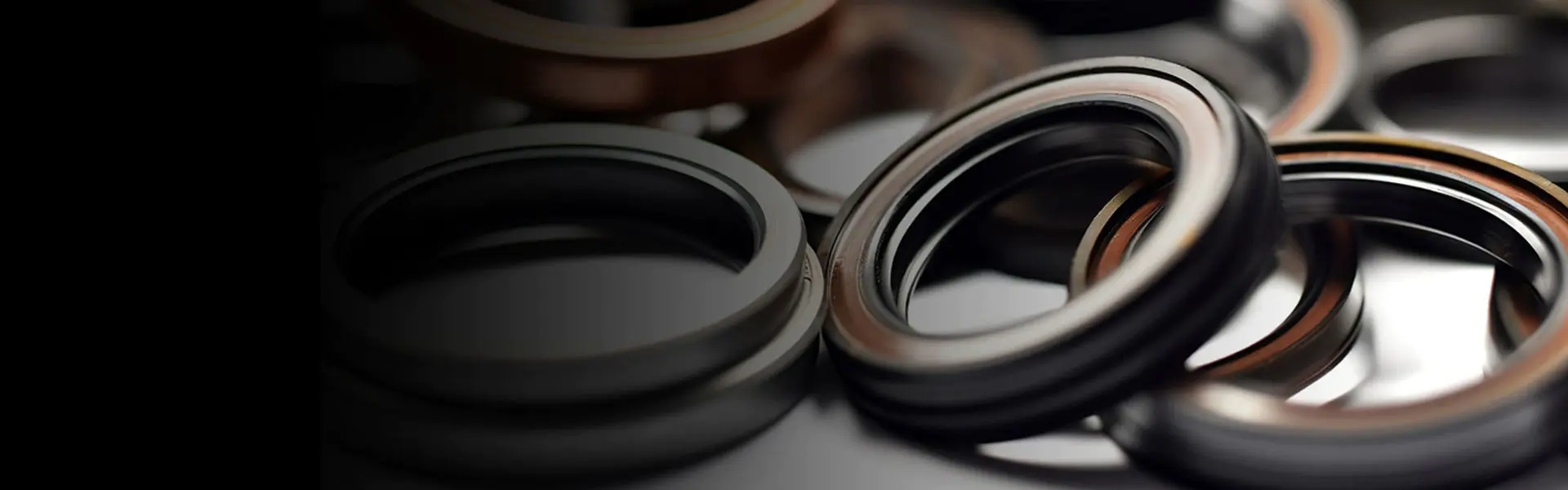
Spiral wound gaskets are precision-engineered sealing components designed to create a reliable, leak-tight seal between two flange faces. They are constructed by spirally winding a pre-formed metal strip (typically V-shaped) and a soft filler material, such as graphite or PTFE, around a central metal ring (or mandrel). This unique construction combines the resilience and conformability of the filler with the strength and spring-back of the metal, making them exceptionally effective for a wide range of demanding industrial applications. At Kaxite, we utilize state-of-the-art manufacturing techniques to produce gaskets that meet and exceed the most rigorous international standards, ensuring performance under extreme pressure, temperature, and chemical exposure.
Understanding the precise specifications of a spiral wound gasket is crucial for selecting the correct component for your system. Below are the core parameters that define Kaxite spiral wound gaskets.
The performance of a gasket is heavily dependent on the materials chosen for the winding and filler. We offer a comprehensive selection to suit various media and operating conditions.
Kaxite gaskets are manufactured to conform to global dimensional standards, ensuring compatibility with your existing flanges.
| Standard | Description | Common Pressure Classes (PN/ANSI) | Typical Sizes (NPS / DN) |
|---|---|---|---|
| ASME B16.20 / ANSI | American standard covering ring, spiral wound, and jacketed gaskets for pipe flanges. | Class 150, 300, 600, 900, 1500, 2500 | 1/2" to 60" (DN15 to DN1500) |
| EN 1514-1 / DIN | European standard for dimensions and materials of non-metallic gaskets for flanges. | PN 6, 10, 16, 25, 40, 63, 100 | DN10 to DN2000 |
| JIS B 2404 | Japanese Industrial Standard for spiral wound gaskets. | 5K, 10K, 16K, 20K, 30K, 40K, 63K | 10A to 1500A |
Spiral wound gaskets come in different styles based on the presence and type of centering/retaining rings.
| Style | Inner Ring | Outer Ring | Primary Function & Application |
|---|---|---|---|
| Style 1000 (Basic Wound) | No | No | For standard flanges without recess. Requires careful centering during installation. |
| Style 2000 (Inner Ring) | Yes | No | Inner ring prevents inward buckling of the winding, protects filler from erosion, and acts as a compression stop. Used for high-pressure/vacuum and turbulent flow. |
| Style 3000 (Outer Ring) | No | Yes | Outer ring provides centering, protects the wound element from mechanical damage, and contains any potential filler blow-out. |
| Style 4000 (Inner & Outer Ring) | Yes | Yes | Combines all benefits. Offers maximum protection, stability, and guidance. Recommended for critical services and large diameter flanges. |
Q: When should I choose a spiral wound gasket over other gasket types like sheet or ring joint gaskets?
A: Spiral wound gaskets are the preferred choice for medium to high-pressure applications (typically above Class 150/PN16) and for a wide temperature range (-200°C to +1000°C depending on materials). They excel in services with thermal cycling, variable pressures, and on flanges with slight imperfections. They offer superior resilience and sealing reliability compared to static sheet gaskets and are more cost-effective and easier to install than metal ring joint gaskets for many applications.
Q: How do I select the correct metal and filler material combination for my application?
A: Material selection is a three-step process. First, identify the chemical compatibility of the gasket materials with the process media. Second, consider the maximum and minimum operating temperatures. Third, factor in the pressure and flange surface condition. For example, for hot oil service, a 316 Stainless Steel/Graphite combination is common. For concentrated sulfuric acid at moderate temperatures, Alloy 20/PTFE might be specified. Kaxite technical support can provide detailed material selection charts and application-specific recommendations.
Q: What is the importance of the "gasket stress" or "seating stress," and how is it achieved?
A: Gasket stress is the pressure exerted on the gasket by the flange bolts when they are tightened. It is crucial for the filler material to flow and fill the micro-imperfections on the flange faces, creating the initial seal. Spiral wound gaskets require a specific minimum seating stress (varying by material, e.g., ~10,000 psi for graphite fillers) which must be achieved during bolt-up using proper torque sequences and procedures. Under-torquing leads to leakage; over-torquing can crush the winding, destroying its spring-back and also causing leakage.
Q: Can spiral wound gaskets be used in fire-safe applications?
A: Yes, absolutely. For applications requiring fire-safe certification (like API 607/API 6FB), specific constructions are used. The most common is a spiral wound gasket with a mica/graphite filler and an inner ring. In a fire, the graphite combusts, but the mica and metal winding remain, forming a temporary metallic seal that prevents catastrophic leakage. Kaxite produces certified fire-safe gaskets that meet API, ISO, and other international fire test standards.
Q: How do I identify the markings on a spiral wound gasket, and what do they mean?
A: Reputable manufacturers like Kaxite permanently mark each gasket for traceability. The standard markings, often etched on the outer ring, include: Manufacturer's Logo/Trademark (e.g., Kaxite), Size (NPS/DN), Pressure Class (e.g., 150#), Material Code (e.g., 316/GRA for 316 SS with Graphite), and sometimes a heat code or lot number. This ensures you have the correct gasket as specified and allows for quality tracking.
Q: What are the best practices for storing and handling spiral wound gaskets before installation?
A: Store gaskets in their original protective packaging in a clean, dry, temperature-stable environment. Avoid exposure to moisture, dust, and direct sunlight. Never stack heavy objects on them. Handle with clean gloves to prevent contamination from oils and salts on your skin. Inspect the gasket before installation: the winding should be even and undamaged, with no loose filler material. Do not use a gasket that has been dropped or shows signs of impact damage.
Beyond standard specifications, Kaxite integrates advanced engineering features to enhance performance and longevity.


