
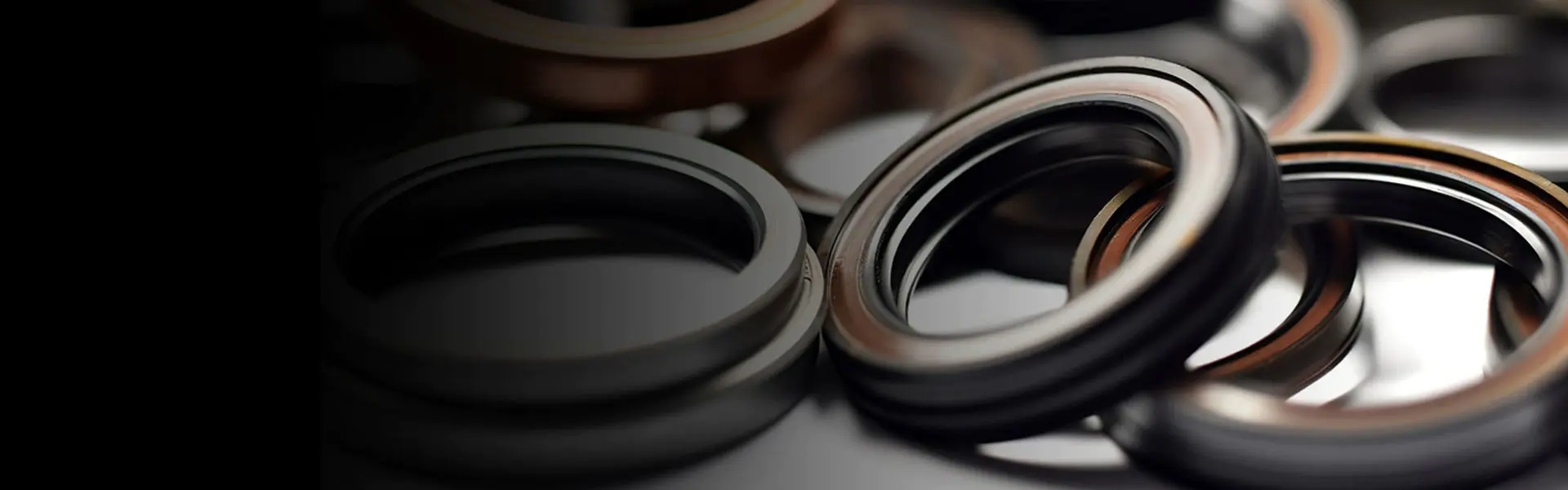
In demanding industrial environments where reliability is non-negotiable, Corrugated Gaskets stand as a cornerstone of effective sealing technology. These gaskets are engineered to provide robust, leak-tight seals in applications involving high temperatures, extreme pressures, and aggressive media. Their unique design, featuring a series of concentric corrugations or grooves on the sealing faces, offers superior flexibility and resilience compared to flat gaskets. At Kaxite, we specialize in manufacturing premium-quality corrugated gaskets that meet the rigorous standards of industries worldwide, ensuring operational safety, efficiency, and longevity.
The fundamental advantage of a corrugated gasket lies in its corrugated metallic core. This core, typically made from stainless steel, carbon steel, or exotic alloys, is often covered with a soft filler material like graphite, PTFE, or ceramic. This combination creates a seal that is both mechanically strong and highly conformable.
Our product range is designed to cater to diverse application needs. Below are the detailed specifications for our standard and custom corrugated gaskets.
| Component | Material Options | Key Properties | Typical Applications |
|---|---|---|---|
| Metallic Core | 304/316 Stainless Steel, Carbon Steel, Inconel 600/625, Hastelloy C276, Titanium, Monel | Provides structural strength, spring-back, and corrosion resistance. | General chemical, Petrochemical, High-temperature steam |
| Facing / Filler Material | Flexible Graphite (GRA), PTFE, Ceramic Fiber, Mica | Creates the primary seal, fills micro-imperfections, offers chemical inertness. | Acid/Alkali service, Food & Pharma, Flue Gas Ducts |
| Optional Features | Inner/Outer Guide Rings (Carbon Steel, SS), Perforated Core, V-Shaped Corrugations | Prevents over-compression, controls gasket blow-out, directs media flow. | High-pressure turbulence, Large diameter flanges, Cyclic service |
| Parameter | Standard Range | Custom Capability |
|---|---|---|
| Size (Inner Diameter) | 15 mm (1/2") to 1500 mm (60") | Up to 3000 mm (118") or larger on request. |
| Pressure Rating | Up to 300 Bar (Class 2500) | Engineered solutions for higher pressures. |
| Temperature Range | -200°C to +900°C (-328°F to +1652°F) | Material-specific; consult for extremes. |
| Corrugation Pitch & Depth | Standard: 1.5 mm to 6 mm pitch | Customized for optimal seal density and flexibility. |
| Standards Compliance | ASME B16.20, DIN/EN 1514, API 6A, ISO 9001 | Tailored to client-specific standards (NORSOK, TA-Luft, etc.). |
Our gaskets are trusted in critical sealing points across multiple sectors:
Q: What is the main difference between a corrugated gasket and a spiral wound gasket?
A: While both are composite metal gaskets, their construction differs significantly. A corrugated gasket has a solid, corrugated (wavy) metal core laminated with filler. A spiral wound gasket is made by winding alternating plies of metal strip and filler material into a V-shaped spiral. Corrugated gaskets often provide better sealing on uneven surfaces and generally require lower bolt load. Spiral wound gaskets are excellent for high-pressure cycling but may have a higher cost for some sizes.
Q: How do I select the right facing/filler material for my application?
A: The selection depends on the chemical compatibility, temperature, and pressure of your process media. Flexible Graphite (GRA) is the most versatile, offering excellent temperature resistance (up to 900°C in inert atmospheres) and good chemical resistance, but it is not suitable for strong oxidizers. PTFE is ideal for highly corrosive chemicals and cryogenic temperatures but is limited to about 260°C. Ceramic Fiber is used for extreme high-temperature applications involving hot gases or fire.
Q: Can corrugated gaskets be reused?
A: It is not recommended to reuse corrugated gaskets. Once compressed during installation, the filler material conforms to the flange surface and the metallic core undergoes plastic deformation to achieve the seal. Reusing a compressed gasket will likely result in an inadequate seal and potential leakage. Always install a new gasket during maintenance or reassembly.
Q: What are the key installation tips for corrugated gaskets?
A: Proper installation is critical. Ensure the flange surfaces are clean, undamaged, and aligned. Never use sealants or adhesives on the gasket unless specifically recommended by Kaxite for a special product variant. Follow a cross-bolt tightening pattern (star pattern) and torque the bolts in multiple incremental passes to the specified value. This ensures even compression and prevents distortion of the gasket or flange.
Q: Does Kaxite provide corrugated gaskets for non-standard sizes or special shapes?
A: Absolutely. A core strength of Kaxite is our custom engineering and manufacturing capability. We routinely produce gaskets in non-round shapes (oval, square, rectangular), with special bolt hole patterns, and for flanges that are out-of-round or damaged. Provide us with a drawing, sample, or precise measurements, and our engineering team will deliver a solution.
Q: How do corrugated gaskets perform under thermal cycling?
A: They perform exceptionally well. The inherent "spring-like" action of the corrugated metal core allows the gasket to expand and contract with the flanges during temperature changes. This flexibility helps maintain sealing force (resilience) and prevents the leakage that can occur with gaskets that relax or creep under thermal cycling conditions.


