
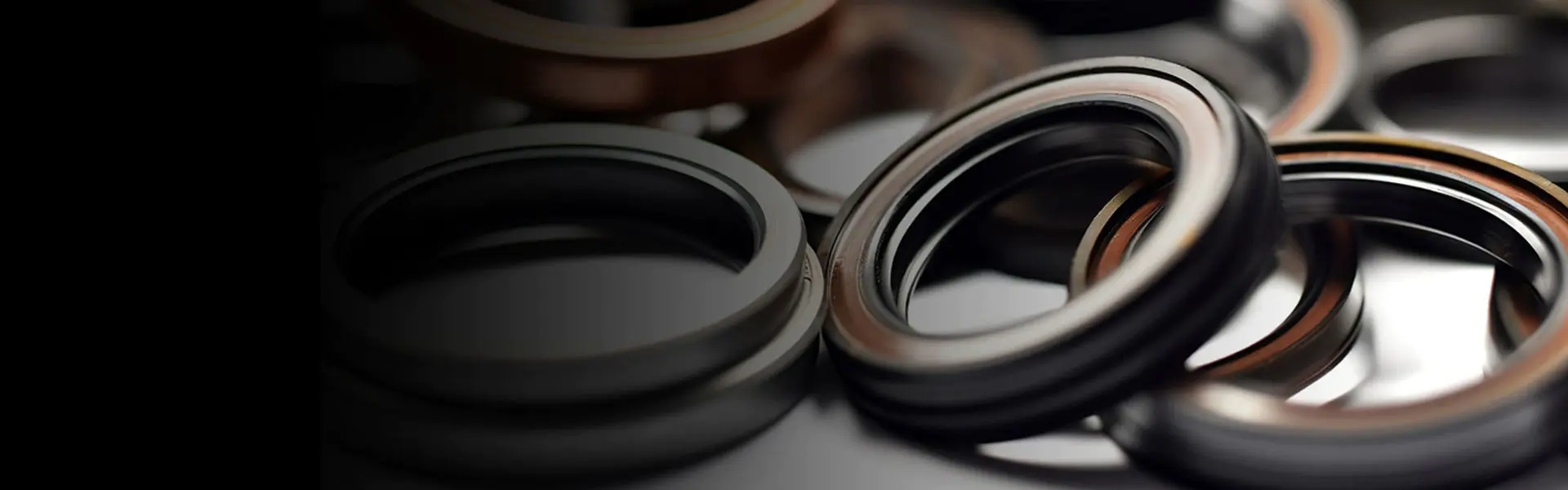
In the intricate world of industrial machinery, automotive systems, plumbing networks, and countless other applications, one small yet critical component stands as a silent guardian against failure: the Rubber Gaskets. These precision-engineered seals are the unsung heroes, preventing leaks, containing pressure, blocking contaminants, and ensuring the smooth, safe, and efficient operation of entire systems. At Kaxite, with decades of expertise in polymer science and sealing technology, we understand that a gasket is never "just a piece of rubber." It is a meticulously designed solution tailored to specific environmental, chemical, and physical demands. This guide delves deep into the world of rubber gaskets, exploring their types, materials, key parameters, and applications, positioning Kaxite as your trusted partner for reliable sealing solutions.
A rubber gasket is a mechanical seal designed to fill the space between two or more mating surfaces, primarily to prevent leakage from or into the joined objects while under compression. They are used to compensate for irregularities in mating surfaces, absorb vibration, and provide a barrier against environmental factors. The effectiveness of a gasket hinges on its ability to flow into and fill surface imperfections, creating a tight, impermeable seal.
Selecting the correct elastomer is paramount. Each material offers a unique profile of strengths and limitations. Kaxite manufactures gaskets from a wide range of high-quality compounds to meet diverse application requirements.
To ensure optimal performance and longevity, Kaxite gaskets are characterized by precise specifications. Here are the key parameters engineers and purchasers must consider:
| Parameter | Description | Why It Matters | Typical Kaxite Range/Standard |
|---|---|---|---|
| Hardness (Shore A Durometer) | Measures the resistance to indentation of the material. | Softer gaskets (lower number) conform better to rough surfaces; harder gaskets (higher number) offer more structural integrity and resist extrusion. | 40 Shore A (Soft) to 90 Shore A (Very Hard) |
| Tensile Strength | The maximum stress a material can withstand while being stretched before breaking. | Indicates the overall durability and ability to handle pressure and mechanical stress during installation and operation. | 5 MPa to 25 MPa (varies by compound) |
| Elongation at Break | The percentage increase in length a material achieves before rupture under tension. | A measure of flexibility and elasticity. Higher elongation allows the gasket to stretch and accommodate movement or flange deflection. | 100% to 600% |
| Compression Set | The permanent deformation remaining after a material has been compressed for a set time and temperature. | Critical for long-term sealing. A low compression set means the gasket maintains its sealing force and does not take a permanent "set," preventing leaks over time. | 10% to 40% (ASTM D395 Method B) |
| Temperature Range | The continuous operating temperature span the material can endure without significant degradation. | Ensures the gasket material remains functional and retains its properties in the application's thermal environment. | -60°C to +300°C (Material Dependent) |
| Fluid/Media Resistance | The material's ability to resist swelling, softening, or chemical attack from specific media. | Directly dictates compatibility with the system's fluids (oil, water, acid, solvent, etc.) to prevent seal failure. | Compatibility charts provided for each Kaxite compound. |
Kaxite produces gaskets in various profiles to suit different sealing geometries and requirements:
Q: How do I choose the right rubber material for my gasket application?
A: Selection is based on the operating environment. You must identify the primary media (e.g., engine oil, hot water, ozone), the temperature range (both minimum and maximum), and the pressure. For example, use NBR for oil resistance, EPDM for weather/steam, and FKM for high-temp aggressive chemicals. Always consult Kaxite's chemical compatibility guides and technical datasheets for confirmation.
Q: What is the difference between a gasket and an O-ring?
A: Both are seals, but their application differs. A gasket is typically used as a static seal between two flat, stationary surfaces (flanges, covers, housings). An O-ring is usually installed in a machined groove (gland) and can be used as a static seal, or more commonly, as a dynamic seal where there is relative motion between parts (e.g., in pistons, rotating shafts).
Q: Why does my rubber gasket fail prematurely?
A: Premature failure can stem from several root causes: Chemical Incompatibility: Swelling, cracking, or softening due to fluid attack. Improper Compression: Under-compression leads to leaks; over-compression can cause extrusion or physical crushing. Excessive Temperature: Exceeding the material's rated range causes hardening, cracking, or melting. Poor Surface Finish: Rough or scored flange surfaces can cut or abrade the gasket. A Kaxite technical audit can diagnose the specific failure mode.
Q: How important is flange surface finish for a rubber gasket?
A: Extremely important. A surface that is too rough can cut the gasket or prevent it from flowing into imperfections. A surface that is too smooth (like a mirror finish) may not allow enough friction to keep the gasket from being extruded under pressure. A typical recommended surface finish for static rubber gaskets is between 125 and 250 microinches Ra (3.2 to 6.3 µm Ra).
Q: Can Kaxite manufacture custom rubber gaskets?
A: Absolutely. While we stock a vast range of standard sizes and materials, custom manufacturing is a core strength at Kaxite. We can produce gaskets from custom-compounded materials in virtually any shape or size using precision die-cutting, waterjet cutting, or custom molding processes. Providing a sample, drawing, or precise specifications allows us to quote and manufacture to your exact needs.
Q: What is compression set and why is it a critical specification?
A: Compression set is a measurement of a material's ability to retain its elastic properties after prolonged compression. A low percentage (e.g., 15%) is desirable. It indicates that after being squeezed between flanges for a long time, the gasket will spring back and maintain sealing force when the pressure is released (during maintenance). A high compression set means the gasket has taken a permanent "set," become flat, and lost its ability to reseal, leading to leaks upon reassembly.
Q: How should I store spare rubber gaskets?
A: Proper storage extends shelf life. Store gaskets in a cool, dark, and dry environment, away from direct sunlight, ozone sources (like electric motors), and extreme temperatures. Ideally, keep them in their original packaging, laid flat to avoid deformation. Do not hang O-rings on pegs, as this can cause permanent deformation. Most standard rubber compounds have a shelf life of 5-10 years under ideal conditions.


