
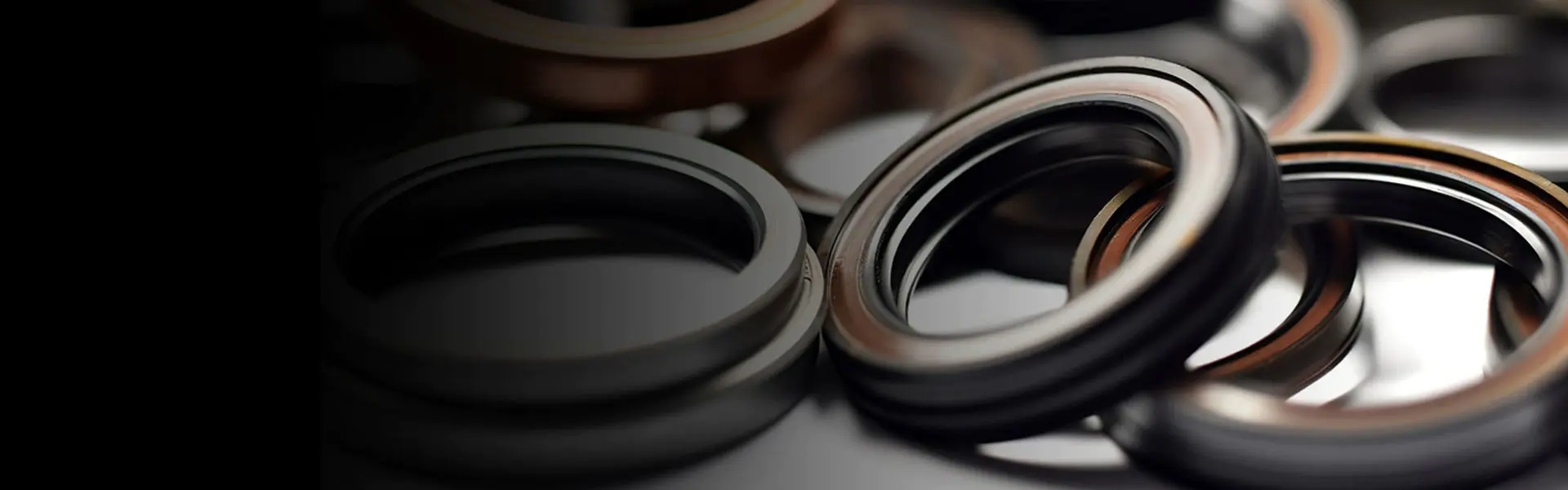
In the world of high-performance sealing, where failure is not an option, the choice of material defines the limits of your application. For engineers and procurement specialists facing extremes of temperature, aggressive chemicals, high pressure, and demanding regulatory standards, PTFE & PEEK Seals represent the pinnacle of sealing technology. Kaxite Sealing Solutions, with decades of specialized expertise, leads the industry in engineering these advanced polymer seals that deliver reliability where traditional elastomers fall short.
PTFE (Polytetrafluoroethylene) and PEEK (Polyetheretherketone) are high-performance thermoplastics renowned for their exceptional properties. Unlike rubber or metal seals, they offer a unique combination of traits that solve complex sealing challenges.
Kaxite's PTFE seals leverage the classic properties of PTFE, often enhanced with fillers for improved performance in specific areas. Our manufacturing precision ensures leak-proof integrity in the most corrosive environments.
| Property | Virgin PTFE | Glass-Filled PTFE (25%) | Carbon-Filled PTFE (25%) | Bronze-Filled PTFE (40%) |
|---|---|---|---|---|
| Primary Advantage | Ultimate chemical purity, electrical insulation | Improved wear resistance, compression strength | Excellent wear & creep resistance, thermal conductivity | Superior wear resistance, high thermal conductivity |
| Temperature Range | -200°C to +260°C | -200°C to +260°C | -200°C to +260°C | -200°C to +260°C |
| Max Pressure (Static) | Up to 20 MPa (2900 psi) | Up to 25 MPa (3625 psi) | Up to 30 MPa (4350 psi) | Up to 35 MPa (5075 psi) |
| Key Applications | Semiconductor, Pharma, Food & Beverage, Chemical Lining | Pumps, Valves, Compressors (general industrial) | Bearings, Piston Rings, Thrust Washers | Heavy-duty bearings, Wear plates, High-load applications |
Kaxite PEEK seals are engineered for applications demanding exceptional mechanical strength, fatigue resistance, and stability at continuous high temperatures. They are the material of choice for challenging oil & gas, aerospace, and high-end automotive applications.
| Property | Virgin PEEK | Carbon Fiber-Reinforced PEEK (30%) | Glass Fiber-Reinforced PEEK (30%) | PTFE-Blended PEEK |
|---|---|---|---|---|
| Primary Advantage | High strength, purity, hydrolysis resistance | Maximum stiffness, strength, wear & creep resistance | High strength, good chemical resistance, cost-effective | Optimized for low friction & wear, excellent PV limit |
| Temperature Range | -100°C to +260°C (peak 310°C) | -100°C to +260°C (peak 310°C) | -100°C to +260°C | -100°C to +250°C |
| Tensile Strength | 90 - 100 MPa | 150 - 200 MPa | 120 - 160 MPa | 80 - 90 MPa |
| Key Applications | FDA/USP Class VI parts, Oil & Gas (sour service), Semiconductor | Aerospace, High-performance bearings, Valve seats | Chemical pump seals, Electrical connectors, Automotive | Dynamic seals, Bushings, Compressor rings |
Kaxite manufactures a comprehensive range of seal profiles and configurations in both PTFE and PEEK to meet exact design requirements:
Q: When should I choose PTFE over PEEK for a seal, or vice versa?
A: The choice hinges on the primary challenge. Choose PTFE (especially virgin) for ultimate chemical inertness, the lowest friction, or ultra-high purity applications (e.g., semiconductor wet benches, pharmaceutical fluid paths). Choose PEEK when you need significantly higher mechanical strength, rigidity, fatigue resistance, and long-term performance under continuous high temperature and high pressure, particularly in dynamic applications. For example, a static gasket in a concentrated acid line would use PTFE, while a dynamic seal in a high-pressure hot water pump would benefit more from PEEK's strength.
Q: Can PTFE and PEEK seals handle dynamic sealing applications?
A: Yes, both can be excellent for dynamic sealing, but with considerations. Pure PTFE can exhibit cold flow (creep). For dynamic use, filled PTFE grades (like carbon or bronze) or spring-energized PTFE seals are used to combat creep and maintain sealing force. PEEK, with its inherent strength and creep resistance, is often superior for demanding dynamic applications, especially when combined with a lubricating filler like PTFE in a blended compound.
Q: What are the limitations of PTFE and PEEK seals?
A: Key limitations include: Cost: They are more expensive than standard elastomers. Elasticity: They are not elastic like rubber; they seal through geometric design and controlled deformation (hence the use of spring energizers). Radiation: Both degrade under high levels of nuclear radiation. Specific Chemicals: While highly resistant, PEEK is susceptible to concentrated sulfuric acid and halogens. PTFE can be permeated by certain gases. Always consult Kaxite's chemical compatibility charts for your specific medium.
Q: How do I ensure proper gland design for a PTFE or PEEK seal?
A: Gland design is critical due to the materials' low elasticity. Key principles: 1) Surface Finish: A fine surface finish (0.2-0.8 μm Ra) on the mating hardware is crucial to prevent wear. 2) Clearances: Maintain tight diametrical clearances to prevent seal extrusion. 3) Fill Volume: The gland must be designed to accommodate the seal's volume correctly, allowing for thermal expansion. Kaxite provides detailed gland design guidelines and engineering support for every seal configuration we offer.
Q: Are Kaxite's seals suitable for food, beverage, and pharmaceutical applications?
A: Absolutely. Kaxite offers specific grades of both PTFE and PEEK that are compliant with FDA 21 CFR, EU Regulation 10/2011, and USP Class VI standards. Our virgin PTFE and certain virgin PEEK grades are naturally white, non-additive materials that meet the strict requirements for purity and non-toxicity in direct product contact applications. Certificates of Compliance are available upon request.
Q: What are spring-energized seals, and when are they necessary?
A: A spring-energized seal consists of a PTFE or PEEK jacket (the sealing lip) with a metal spring (stainless steel or Inconel) inside. The spring provides a constant, reliable sealing force, compensating for material creep, system vibration, thermal cycling, and wear. They are essential for: Ultra-low temperature sealing, High-pressure applications, Systems with large pressure or temperature cycles, Applications requiring near-zero leakage over long periods (e.g., satellite thrusters, deep-well equipment). Kaxite specializes in designing and manufacturing these critical components.
Q: Can Kaxite manufacture custom-shaped seals or components?
A: Yes, custom manufacturing is a core strength at Kaxite. We routinely produce seals and components with non-standard cross-sections, large diameters, complex geometries, and integrated features through advanced machining processes from our stock of PTFE and PEEK blanks. We collaborate closely with customers from the design phase to ensure manufacturability and performance.


