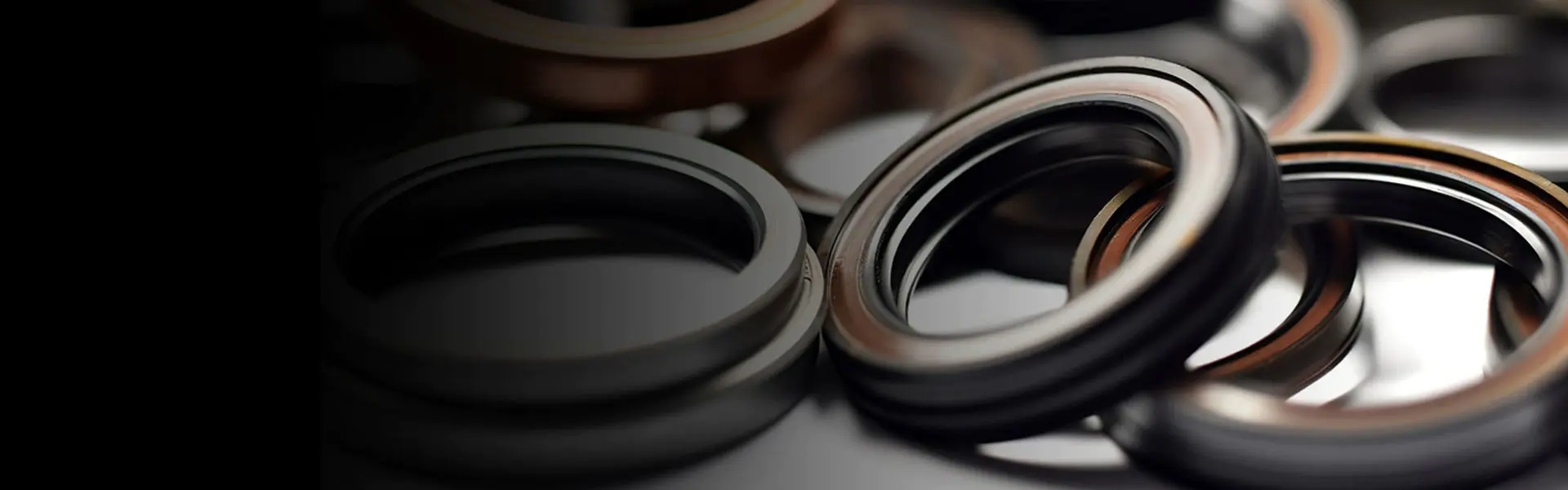
Customized PTFE Ball Manufacturer Solutions in China
PTFE Ball, also known as Polytetrafluoroethylene Ball or Teflon® Ball, represents the pinnacle of performance in sealing and bearing applications across demanding industries. At Kaxite, we engineer these spherical components to deliver unparalleled chemical resistance, extreme temperature tolerance, and a near-frictionless coefficient that ensures longevity and reliability in the most challenging environments. Our commitment to precision manufacturing and material purity guarantees that every Kaxite PTFE Ball meets the rigorous specifications required for critical functions in aerospace, chemical processing, semiconductor manufacturing, pharmaceutical production, and high-performance automotive systems.
### In-Depth Product Specifications and Technical Data
Understanding the precise properties of PTFE balls is crucial for selecting the correct component for your application. Below, we detail the core specifications and performance characteristics of Kaxite's standard PTFE ball offerings.
#### Material Composition & Key Properties
Our balls are manufactured from 100% virgin, high-grade PTFE polymer resin. This ensures consistency, purity, and the full spectrum of PTFE's inherent benefits:
* **Chemical Inertness:** Unaffected by virtually all industrial chemicals, solvents, and acids, with exceptions such as molten alkali metals and fluorine under specific conditions.
* **Extreme Temperature Range:** Suitable for continuous use from -200°C (-328°F) to +260°C (+500°F), with short-term peaks up to 300°C (572°F) possible.
* **Exceptionally Low Friction:** Possesses the lowest coefficient of friction of any solid material, enabling smooth operation and reducing wear.
* **Excellent Dielectric Properties:** A superb electrical insulator with high dielectric strength.
* **Non-Stick & Non-Wetting:** Hydrophobic and oleophobic surface prevents adhesion of most materials.
* **FDA Compliance & USP Class VI:** Select grades are available that meet FDA requirements for food contact and USP Class VI for medical applications.
#### Standard Size Range & Tolerances
Kaxite manufactures PTFE balls in a comprehensive range of diameters to suit diverse applications. Standard sizes and their associated dimensional tolerances are as follows:
| Nominal Diameter (mm) | Diameter Tolerance (mm) | Sphericity Tolerance (mm) | Common Applications |
| :--- | :--- | :--- | :--- |
| 0.5 mm - 1.0 mm | ±0.025 | 0.025 | Miniature valves, precision instruments, lab equipment |
| 1.0 mm - 5.0 mm | ±0.05 | 0.05 | Fluid control valves, gauges, dispensers |
| 5.0 mm - 10.0 mm | ±0.075 | 0.075 | Pump check valves, mechanical seals, bearings |
| 10.0 mm - 25.0 mm | ±0.10 | 0.10 | Large bore valves, industrial bearings, agitators |
| 25.0 mm - 50.0 mm | ±0.15 | 0.15 | Specialized machinery, heavy-duty flow control, architectural |
| 50.0 mm and above | ±0.20 or custom | Custom | Custom engineered solutions, architectural accents |
*Note: Tighter tolerances are available upon request for high-precision applications.*
#### Mechanical & Physical Property Table
The following table provides a detailed overview of the typical mechanical and physical properties of Kaxite's standard PTFE material used for ball manufacturing.
| Property | Test Method | Metric Value | Imperial Value |
| :--- | :--- | :--- | :--- |
| **Density** | ASTM D792 | 2.15 - 2.20 g/cm³ | 0.077 - 0.079 lb/in³ |
| **Tensile Strength** | ASTM D638 | 25 - 35 MPa | 3600 - 5000 psi |
| **Elongation at Break** | ASTM D638 | 300 - 500 % | 300 - 500 % |
| **Compressive Strength** | ASTM D695 | 12 MPa | 1700 psi |
| **Hardness, Shore D** | ASTM D2240 | 50 - 65 | 50 - 65 |
| **Coefficient of Friction (Static)** | ASTM D1894 | 0.04 - 0.08 | 0.04 - 0.08 |
| **Thermal Conductivity** | ASTM C177 | 0.25 W/m·K | 1.73 BTU·in/(hr·ft²·°F) |
| **Linear Thermal Expansion** | ASTM D696 | 120 x 10⁻⁶ /°C | 67 x 10⁻⁶ /°F |
| **Water Absorption** | ASTM D570 | < 0.01 % | < 0.01 % |
### Industry-Specific Applications of Kaxite PTFE Balls
The unique combination of properties makes our PTFE balls indispensable in numerous sectors:
* **Chemical Processing:** Used as valve seats and balls in pumps, meters, and sampling valves handling corrosive acids, bases, and solvents. Their inertness prevents contamination and system failure.
* **Semiconductor & Wafer Fab:** Employed in ultra-pure fluid handling systems for etchants, CMP slurries, and high-purity gases. Kaxite's high-purity grades prevent particle generation and ionic contamination.
* **Food, Beverage & Pharmaceutical:** FDA-compliant balls are used in sanitary ball valves, diaphragm valves, and dispensing systems where cleanliness, non-toxicity, and ease of sterilization (via CIP/SIP) are paramount.
* **Aerospace & Defense:** Serve in fuel systems, hydraulic controls, and oxygen systems due to their wide temperature capability, low outgassing in vacuum, and reliability.
* **Automotive & Transportation:** Found in transmission systems, fuel injection components, and A/C systems as durable, low-friction bearings and seals.
* **General Industrial:** Widely used as low-friction bearings in conveyors, packaging equipment, and material handling devices, especially where lubrication is undesirable or impossible.
### Frequently Asked Questions (FAQ) About PTFE Balls
**Q: What are the primary advantages of using a PTFE ball over a metal or ceramic ball?**
**A:** The key advantages are chemical inertness, a very low coefficient of friction, and a wide operating temperature range. Unlike metals, PTFE balls will not corrode when exposed to aggressive chemicals. They are softer than ceramics, reducing wear on mating surfaces and operating more quietly. Their self-lubricating nature often eliminates the need for external lubricants, which can attract dirt or be incompatible with process fluids.
**Q: Can Kaxite PTFE balls be used in high-pressure applications?**
**A:** While PTFE has excellent chemical and thermal properties, it has a lower compressive strength compared to metals. Standard PTFE balls are suitable for low to moderate pressure applications (typically up to several hundred psi, depending on size, housing, and temperature). For higher pressures, Kaxite offers reinforced PTFE composite balls (e.g., glass-filled, carbon-filled) which exhibit significantly higher compressive strength and creep resistance. Consulting with our engineering team for your specific pressure requirements is recommended.
**Q: How does temperature affect the performance of a PTFE ball?**
**A:** PTFE retains its excellent properties across an exceptionally broad range. At cryogenic temperatures (down to -200°C), it remains flexible and does not become brittle. At elevated temperatures (up to 260°C continuous), it maintains its shape and chemical resistance. However, near the upper limit of its range, its mechanical strength decreases, and it may exhibit higher creep (cold flow). For sustained high-temperature use, we can advise on material grade selection and design considerations.
**Q: Are PTFE balls suitable for use in oxygen service or other high-purity gas systems?**
**A:** Yes, this is a key application. Kaxite PTFE balls are excellent for oxygen service due to their non-flammability and low particle generation. It is critical to use a clean, high-purity grade and ensure the balls are thoroughly cleaned and packaged in a controlled environment to prevent hydrocarbon or particulate contamination, which could pose a ignition risk in oxygen systems.
**Q: What are the available finishes and can PTFE balls be machined to include features like holes or flats?**
**A:** Standard Kaxite PTFE balls have a smooth, molded finish suitable for most sealing and bearing applications. For specialized needs, we can provide secondary machining operations to achieve specific surface finishes. Furthermore, we specialize in custom-machined PTFE spherical components. This includes drilling through-holes or blind holes, adding flats or grooves, or creating unique geometries. These modifications allow the ball to be used as a pivot, a linkage component, or a specialized valve element.
**Q: How should PTFE balls be stored and handled to ensure optimal performance?**
**A:** Store PTFE balls in a cool, dry place away from direct sunlight and extreme heat sources. They should be kept in their original packaging until use to prevent contamination from dust, oils, or other materials. While PTFE is chemically resistant, it can be scratched or marred by sharp metal tools; use care during handling and installation. Clean with isopropyl alcohol or a mild detergent if necessary, and rinse with deionized water for critical applications.
**Q: Does Kaxite offer PTFE balls in colors or with fillers for enhanced properties?**
**A:** Absolutely. While natural PTFE is an opaque white, we offer balls in standard colors (like black) for identification or aesthetic purposes. More importantly, we provide a range of filled PTFE compounds. Common fillers include glass fiber (for improved wear resistance and creep reduction), carbon (for enhanced conductivity and wear), graphite (for increased lubricity), and bronze (for better thermal conductivity and load-bearing). These composite materials tailor the ball's properties to meet specific mechanical, thermal, or electrical demands.
**Q: What quality assurance and certifications does Kaxite provide with its PTFE balls?**
**A:** Kaxite operates under a stringent quality management system. Our production process includes rigorous inspection of raw materials, in-process checks, and final inspection of dimensional tolerances, sphericity, and surface quality. We can provide material certifications (C of A) traceable to the resin batch, and our facility can support requirements for industries needing documentation such as FDA, USP Class VI, or compliance with aerospace and military specifications (e.g., MIL specs).
We use cookies to offer you a better browsing experience, analyze site traffic and personalize content. By using this site, you agree to our use of cookies. Privacy Policy