
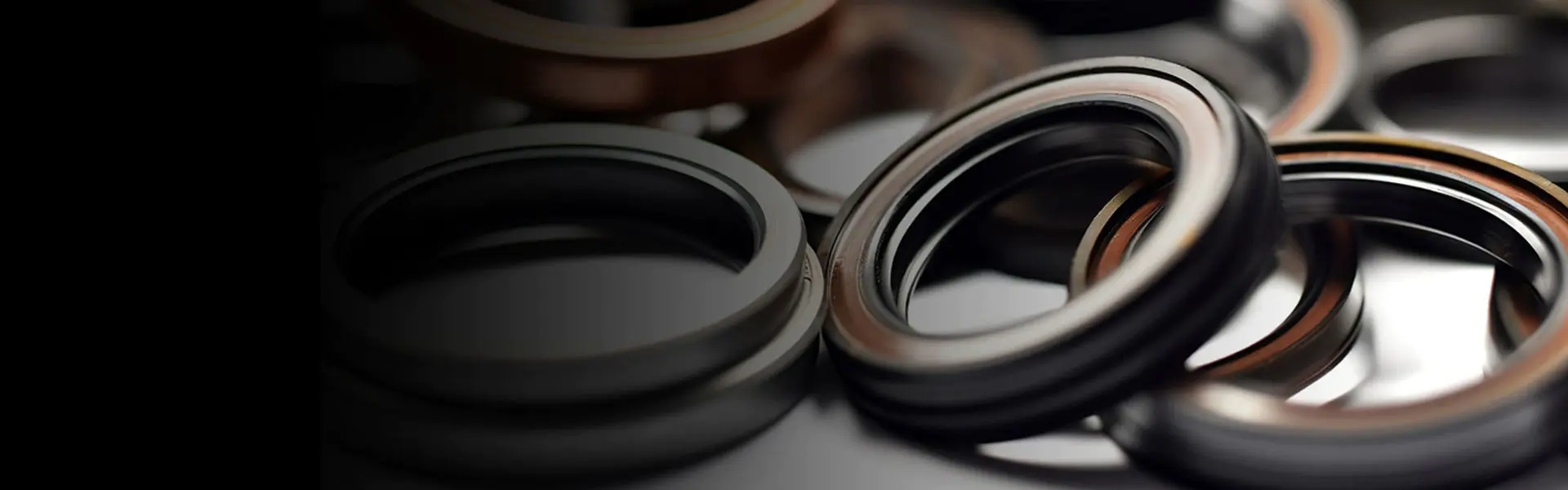
In industrial sealing, the choice of gasket material is not merely a purchasing decision; it is a critical engineering calculation that directly impacts system integrity, safety, and operational cost. At Kaxite, with decades of specialization in high-performance sealing solutions, we understand that specifying the correct gasket material is foundational to preventing leaks, ensuring compliance, and maximizing asset life. This guide delves deep into the technical parameters, material science, and application-specific considerations essential for making an informed selection.
Selecting a gasket material requires a systematic evaluation of the operating environment against the material's inherent properties. The following parameters are non-negotiable in the specification process:
The table below provides a comparative overview of primary gasket material families, highlighting Kaxite's engineered formulations within each category.
| Material Family | Key Composition | Temp. Range (°F) | Pressure Range (PSI) | Primary Media Resistance | Typical Applications | Kaxite Product Series |
|---|---|---|---|---|---|---|
| Non-Asbestos Organic (NAO) | Aramid fibers, synthetic rubbers, fillers | -40 to 400°F | Up to 1500 PSI | Water, steam, oils, mild chemicals | Pump housings, water pipelines, general industrial | Kaxite NAO-Series |
| Compressed Non-Asbestos (CNA) | High-density aramid/cellulose fibers, elastomer binder | -50 to 750°F | Up to 3000 PSI | Wide chemical & thermal stability | Chemical processing, refineries, high-temp flanges | Kaxite CNA-Pro |
| Flexible Graphite | Pure exfoliated graphite, often with stainless steel insert | -400 to 1500°F (inert atm.) | Up to 2500 PSI | Excellent for hydrocarbons, steam, hot oils; poor for strong oxidizers | Heat exchangers, turbine casings, exhaust systems | Kaxite Grafoil-SHIELD |
| PTFE (Polytetrafluoroethylene) | Virgin or filled PTFE polymers | -450 to 500°F | Up to 2000 PSI | Universal chemical resistance (except molten alkali metals) | Pharmaceutical, food & beverage, aggressive chemicals | Kaxite PTFE-Ultra |
| Elastomeric (Rubber) | NBR, EPDM, FKM (Viton), Silicone, CR | -80 to 450°F (varies by polymer) | Up to 1200 PSI | Specific to polymer type (e.g., FKM for fuels/oils, EPDM for steam/water) | Piping, valves, HVAC, automotive | Kaxite Elasto-Seal |
| Metal & Semi-Metallic | Stainless steel, carbon steel, Monel, with soft filler | -330 to 1500°F | Very High (Varies) | High temp/pressure, thermal cycling | Pressure vessels, boiler manways, reactor flanges | Kaxite Spiral-Wound & Jacketed |
Beyond general family characteristics, precise engineering demands scrutiny of quantifiable properties. Kaxite materials are tested to international standards (ASTM, DIN, ISO).
| Property (ASTM Test) | Kaxite NAO-Series | Kaxite CNA-Pro | Kaxite Grafoil-SHIELD | Kaxite PTFE-Ultra | Test Significance |
|---|---|---|---|---|---|
| Density (g/cm³) F1315 | 1.5 - 1.8 | 1.8 - 2.1 | 1.1 - 1.3 | 2.1 - 2.3 | Indicates material compactness & potential leak density. |
| Compressibility (%) F36 | 10 - 18% | 7 - 12% | 15 - 40% | 25 - 50% | Ability to conform to flange surfaces under load. |
| Recovery (%) F36 | 35 - 50% | 45 - 60% | 15 - 25% | 40 - 55% | Ability to maintain seal after pressure/temperature cycling. |
| Tensile Strength (MPa) F152 | 8 - 12 | 12 - 20 | 4 - 8 (with insert) | 10 - 25 | Measures resistance to blow-out and handling damage. |
| Creep Relaxation (%) F38 | 25 - 35% | 15 - 25% | 5 - 15% | 30 - 45% | Loss of bolt load over time; lower is better for joint integrity. |
| pH Range | 2 - 12 | 1 - 14 | 0 - 14 (non-oxidizing) | 0 - 14 | Chemical resistance to acidic/alkaline environments. |
Q: How do I choose between a Compressed Non-Asbestos (CNA) sheet and a Flexible Graphite sheet?
A: The choice hinges on temperature, media, and flange condition. Kaxite CNA-Pro offers superior bolt load retention and creep resistance for standard to high-pressure applications with thermal cycling up to 750°F and a broad pH range. Kaxite Grafoil-SHIELD (Flexible Graphite) excels in extreme temperatures (up to 1500°F in inert atmospheres) and provides excellent sealing for hydrocarbons and steam. However, graphite is not recommended for strong oxidizing acids (e.g., nitric, sulfuric above certain concentrations) or where high chloride stress corrosion cracking of stainless flanges is a concern. For oxidizing environments, our PTFE-Ultra or specially formulated CNA materials are preferable.
Q: What is the significance of gasket thickness, and how do I select the correct one?
A: Thickness is a critical functional dimension, not just a filler. Thinner gaskets (1/32") offer higher load-bearing capacity and lower creep but require very flat, smooth flanges. Thicker gaskets (1/8" or 3/16") compensate for flange misalignment, warpage, or surface imperfections due to higher compressibility. For low bolt loads, a thicker, softer gasket may seal better. Kaxite provides detailed load-compression curves for each material and thickness to aid in finite element analysis (FEA) and joint design. Always match thickness to the flange design (e.g., raised face, flat face) and the material's recommended seating stress.
Q: Can I reuse a gasket after disassembling a flange connection?
A: As a universal rule, gasket reuse is strongly discouraged and is considered poor engineering practice. During initial installation, the gasket material undergoes plastic and elastic deformation to conform to the unique "fingerprint" of the flange surfaces. Upon disassembly, this seating is compromised. Reusing it leads to a high risk of leakage due to loss of recovery, reduced thickness, and potential embedded damage. Kaxite always recommends installing a new, certified gasket with proper surface preparation and bolt torque procedure for every assembly to ensure a reliable, leak-free seal.
Q: What is the role of surface finish on the flange, and how does it interact with gasket material choice?
A: Flange surface finish (measured in microinches Ra or microns) is a key partner to the gasket. A rough finish (125-250 µ-in Ra) requires a softer, more conformable gasket material (e.g., standard NAO, thicker PTFE) to flow into the grooves. A very smooth finish (30-60 µ-in Ra) works well with harder, less compressible materials like thin CNA or metal-reinforced gaskets. For optimal performance with Kaxite graphite or PTFE materials, a serrated (phonographic) spiral finish (60-125 µ-in Ra) is often ideal, providing "bite" without causing excessive shear. Mismatching a hard gasket with a rough surface is a common cause of installation leaks.
Q: How does temperature cycling affect different gasket materials, and which ones perform best?
A: Thermal cycling causes flanges to expand and contract at different rates, imposing dynamic stress on the gasket. Materials with high recovery and low creep relaxation perform best. Kaxite CNA-Pro is specifically engineered for such conditions, maintaining a high percentage of the initial bolt load. Flexible graphite has excellent temperature tolerance but lower recovery; it often performs best in constant high-temperature service. Elastomers like EPDM or FKM have good recovery but are limited by their upper temperature ceiling. For severe cycling, semi-metallic gaskets like our Kaxite Spiral-Wound (metal wound with graphite filler) are often the premium choice due to the metal's spring-like action.
Q: Are there industry standards for testing and certifying gasket materials?
A: Yes, reputable manufacturers like Kaxite test materials to rigorous international standards. Key standards include ASTM F36 (Compressibility & Recovery), F37 (Sealability), F38 (Creep Relaxation), and F146 (Blowout Resistance). For specific industries, additional certifications apply: ASME B16.20 for pipe flanges, API 601 for refinery services, FDA CFR 177.2600 for food contact, and NSF/ANSI 61 for drinking water. Kaxite provides full material test reports (MTRs) and certificates of compliance for traceability and quality assurance, ensuring our materials meet the exacting demands of power generation, chemical processing, and oil & gas sectors.


