
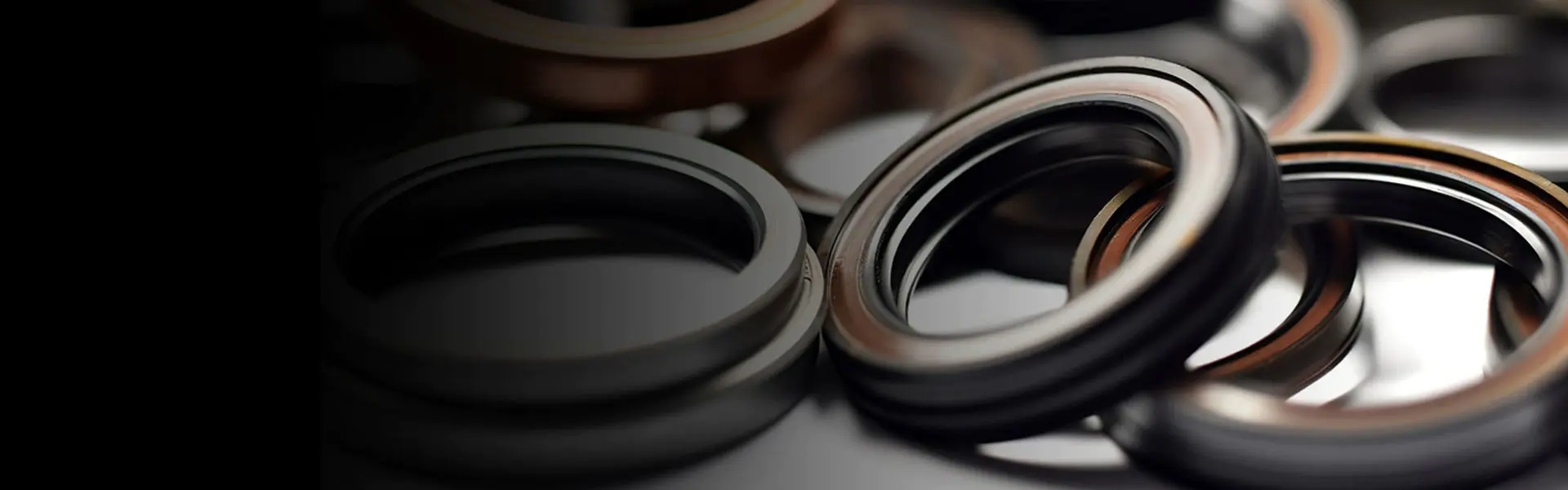
Serrated gaskets are a cornerstone of industrial sealing technology, engineered for reliability in high-pressure, high-temperature, and challenging flange environments. Unlike standard flat gaskets, serrated gaskets feature concentric grooves or "teeth" machined onto one or both sealing faces. This unique design creates multiple concentric sealing lines, significantly enhancing the seal's performance by increasing the unit load on a smaller surface area. At Kaxite, we specialize in the precision manufacturing of serrated metal gaskets, providing solutions that ensure leak-tight integrity and long-term durability for critical applications across oil & gas, chemical processing, power generation, and aerospace industries.
The effectiveness of a serrated gasket lies in its ability to bite into the flange surface. When the flange bolts are torqued, the sharp peaks of the serrations deform and embed slightly into the flange material. This creates a series of robust metal-to-metal seals that are highly resistant to creep relaxation, pressure cycling, and thermal fluctuations. This makes them an ideal choice for applications involving extreme conditions where a flat gasket might fail.
Kaxite serrated gaskets are custom-manufactured to meet precise application requirements. Our standard specifications cover a broad spectrum of industrial needs.
We offer serrated gaskets in numerous alloys. Selection depends on media compatibility, temperature, and pressure.
| Material | ASTM Standard | Common Trade Name | Max Temp. (°F/°C) | Key Properties & Typical Applications |
|---|---|---|---|---|
| Soft Iron | AISI 1000 Series | - | 1000°F / 538°C | Excellent malleability, good for steam, water, oil. Standard for many ASME B16.20 applications. |
| 304 Stainless Steel | A240 304 | 304 SS | 1500°F / 816°C | General corrosion resistance. Used in chemical, food processing, and cryogenic services. |
| 316 Stainless Steel | A240 316 | 316 SS | 1500°F / 816°C | Enhanced corrosion resistance due to molybdenum. Ideal for marine, chloride, and acidic environments. |
| Inconel 600 | B168 | Alloy 600 | 2150°F / 1177°C | High strength and oxidation resistance. Used in furnace, heat treating, and nuclear applications. |
| Monel 400 | B127 | Alloy 400 | 1800°F / 982°C | Superior resistance to hydrofluoric acid, seawater, and alkaline solutions. |
| Titanium | B265 Gr 2 | Gr 2 Ti | 600°F / 316°C | High strength-to-weight ratio, excellent corrosion resistance in chlorides and oxidizing media. |
| Copper | B152 | C11000 | 900°F / 482°C | High thermal conductivity, malleable. Common in heat exchangers and electrical applications. |
The serration profile is critical for performance. Kaxite manufactures to industry-standard patterns.
| Profile Type | Teeth per Inch (TPI) | Included Angle | Tooth Height | Application Notes |
|---|---|---|---|---|
| Concentric V-Groove | 24 - 32 | 90° | 0.015" - 0.025" | Most common profile. Provides excellent sealing for a wide range of pressures. Standard in ASME B16.20. |
| Concentric V-Groove (Coarse) | 16 - 22 | 90° | 0.025" - 0.035" | Used for higher bolt loads and softer flange materials (e.g., aluminum). |
| Spiral Serration | Varies | 90° | 0.020" - 0.030" | Less common, sometimes specified for specific OEM applications or to prevent full-face gasket rotation. |
Kaxite gaskets conform to major international standards.
| Standard | Pressure Class (ANSI/ASME) | Nominal Pipe Size (NPS) Range | Gasket Thickness |
|---|---|---|---|
| ASME B16.20 (Ring Type) | Class 150 to 2500 | 1/2" to 24" | 1/16" to 1/8" (1.5mm to 3mm) |
| ASME B16.21 (Full Face) | Class 150 & 300 | 1/2" to 24" | 1/16" (1.5mm) |
| API 6A (Wellhead) | 5,000 psi to 20,000 psi | Specified by Bore Size | Per API 6A specifications |
| Custom Designs | As required | Any size available | As required |
Q: When should I choose a serrated gasket over a spiral wound or soft gasket?
A: Serrated gaskets are the preferred choice for high-pressure, high-temperature, and critical service applications where leak integrity is paramount. They outperform soft gaskets (like graphite or rubber) in extreme conditions and are often more compact and reusable than spiral wound gaskets for specific pressure classes. Choose serrated gaskets for heat exchangers, reactor flanges, turbine connections, and wellhead equipment where conditions exceed the limits of non-metallic gaskets.
Q: Do serrated gaskets require special flange finishes?
A: Yes, for optimal performance. The ideal flange surface finish is a concentric serration that matches the gasket's tooth profile. A smooth, machined finish (125-250 µin Ra) can also be used, but the serrations will create their own impression. Flanges that are heavily pitted, corroded, or have a random tooled finish (e.g., stock finish) are not recommended, as they will not allow the serrations to embed uniformly, compromising the seal.
Q: Can Kaxite serrated gaskets be reused?
A: Reusability depends on several factors. If the gasket and mating flange serrations are in good condition, with no significant flattening or damage to the teeth, reuse may be possible for the same application. However, for critical services, it is always recommended to consult engineering guidelines or replace the gasket to ensure a guaranteed seal. Reusing a gasket on a different, non-mating flange surface is not advised.
Q: How do I determine the correct torque for installing a serrated metal gasket?
A: Bolt torque is critical. It should be calculated based on the target gasket stress (yield stress of the gasket material), bolt size, grade, and number. Manufacturer data sheets or industry standards like ASME PCC-1 provide guidelines. Generally, serrated gaskets require a higher bolt load per unit area than soft gaskets to achieve proper tooth embedding. Under-torquing can cause leakage; over-torquing can damage the gasket serrations or the flange. Always use a calibrated torque wrench and follow a cross-pattern tightening sequence.
Q: What is the difference between a ring-type (RTJ) and a full-face serrated gasket?
A: A Ring-Type Joint (RTJ) gasket, as per ASME B16.20, sits in a machined groove in the flange and is the standard for high-pressure piping (Class 600 and above). A full-face serrated gasket covers the entire flange face and is used with flat-face or raised-face flanges, typically in lower pressure classes (150, 300). The sealing mechanism is the same, but the gasket design and applicable flange standards differ. Kaxite manufactures both types to precise specifications.
Q: Are serrated gaskets suitable for corrosive services?
A: Absolutely, provided the correct material is selected. This is a key strength of metallic gaskets. Kaxite offers alloys like 316 Stainless Steel, Monel, Inconel, Hastelloy, and Titanium, which provide excellent resistance to a vast array of corrosive media, from acids and alkalis to seawater and chlorides. Material selection must be based on a thorough analysis of the chemical service environment, temperature, and concentration.
Q: How does Kaxite ensure the quality of its serrated gaskets?
A: Kaxite employs a rigorous quality management system. Our manufacturing process starts with certified raw material. Precision CNC machining ensures exacting tolerances on serration profiles, diameters, and thicknesses. We perform 100% dimensional inspection and can provide material test certificates (MTCs) traceable to the heat lot. For critical applications, we offer additional NDT services like liquid penetrant testing. Our gaskets are manufactured to comply with ASME, API, and customer-specific standards.
Q: Can you manufacture serrated gaskets to non-standard sizes or special configurations?
A: Yes. Custom engineering is a core service at Kaxite. We regularly produce gaskets for proprietary equipment, unusual flange designs, extreme pressure/temperature conditions, and specific metallurgical requirements. Our engineering team can work from your drawings, samples, or performance specifications to develop a sealing solution that meets your exact technical challenge.


