
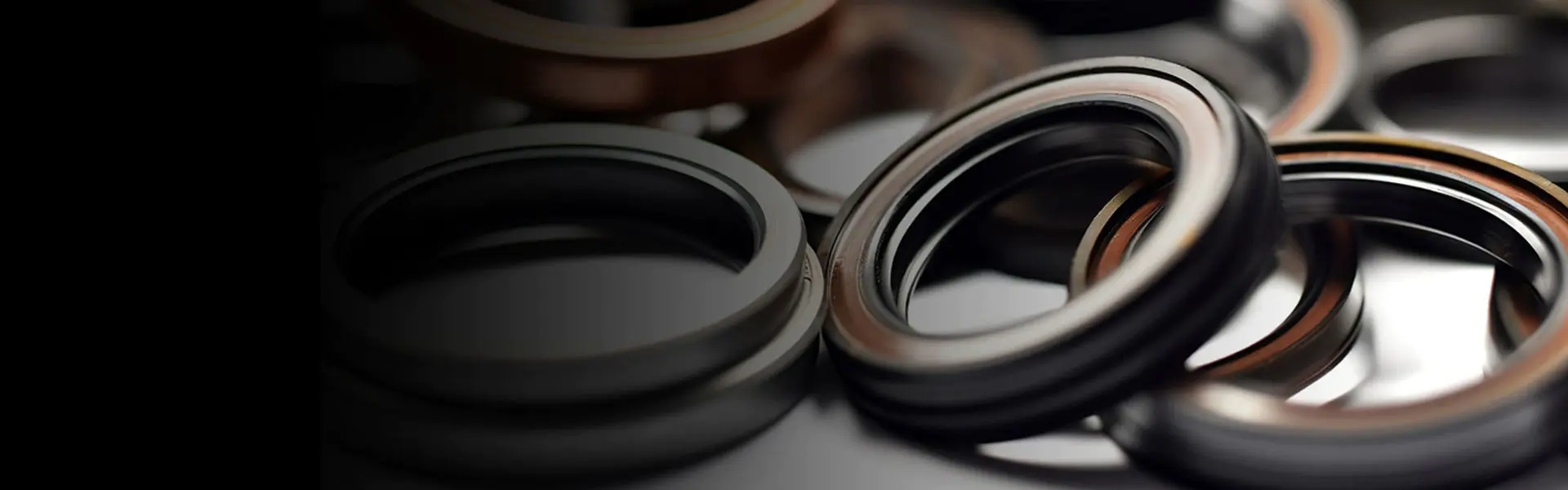
In the demanding world of industrial sealing, where high temperatures, aggressive media, and relentless pressure are the norm, the choice of sealing component is critical to operational efficiency, safety, and longevity. Among the array of available solutions, the Die-formed graphite ring stands out as a pinnacle of engineering precision and material science. Unlike traditional machined or flexible graphite products, a die-formed graphite ring is manufactured through a specialized process where high-purity, expanded graphite foil is precisely stamped and formed into its final shape using hardened steel dies under immense pressure. This method yields a component of exceptional structural integrity, dimensional accuracy, and consistent performance, making it an indispensable seal for flange connections across industries such as petrochemical, power generation, pharmaceutical, and aerospace.
Kaxite has dedicated decades to mastering the art and science of die-forming graphite. Our rings are not merely products; they are reliability engineered into a circular form. We understand that a seal is often the thin line between seamless operation and costly downtime. Therefore, every Kaxite die-formed graphite ring is produced under stringent quality controls, utilizing premium raw materials to ensure it delivers unmatched sealing performance, even under the most extreme conditions. The inherent properties of graphite—excellent thermal stability, chemical inertness, and natural lubricity—are fully realized and enhanced through our controlled die-forming process, resulting in a seal that is both robust and resilient.
The superiority of a Kaxite die-formed graphite ring lies in its precise specifications and material properties. Below are the detailed parameters that define our product's excellence.
Kaxite die-formed graphite rings are manufactured to meet international standards, ensuring direct compatibility with standard flange facings.
| Nominal Pipe Size (NPS) | Ring Inside Diameter (ID) mm / inches | Ring Outside Diameter (OD) mm / inches | Cross-Section Width (mm) | Standard Tolerance |
|---|---|---|---|---|
| 1/2" | 22.0 mm / 0.866" | 35.0 mm / 1.378" | 6.5 | ±0.13 mm |
| 1" | 35.0 mm / 1.378" | 54.0 mm / 2.126" | 9.5 | ±0.15 mm |
| 2" | 62.0 mm / 2.441" | 92.0 mm / 3.622" | 15.0 | ±0.20 mm |
| 4" | 115.0 mm / 4.527" | 157.0 mm / 6.181" | 21.0 | ±0.25 mm |
| 8" | 222.0 mm / 8.740" | 281.0 mm / 11.063" | 29.5 | ±0.30 mm |
| 12" | 330.0 mm / 12.992" | 400.0 mm / 15.748" | 35.0 | ±0.38 mm |
| Graphite Ring Style | Typical Application | Suitable Pressure Classes (ASME B16.5) | Surface Finish Recommendation |
|---|---|---|---|
| Standard Flat Ring | Flat Face (FF) Flanges, Heat Exchangers | 150#, 300# | 125 - 250 µin Ra (3.2 - 6.3 µm Ra) |
| Raised Face (RF) Ring | Raised Face Flanges, General Piping | 150#, 300#, 600# | 125 - 250 µin Ra (3.2 - 6.3 µm Ra) |
| Ring Joint (RTJ) Style | API Ring Type Joint Grooves, High-Pressure Systems | 900#, 1500#, 2500# | 63 - 125 µin Ra (1.6 - 3.2 µm Ra) on groove flanks |
Q: What is the fundamental difference between a die-formed graphite ring and a flexible graphite gasket cut from a sheet?
A: The key difference lies in the manufacturing process and resulting structure. A die-formed ring is created by stamping and compressing expanded graphite foil in a precision mold (die) under high tonnage. This creates a homogenous, dense, and dimensionally exact part with uniform density and grain orientation, leading to consistent sealing force distribution and minimal creep. A cut gasket is simply sliced from a calendered sheet, which can have density variations, cut edges prone to fraying, and less structural integrity. The die-forming process, as perfected by Kaxite, produces a far more reliable and high-performance seal, especially for critical applications.
Q: Can Kaxite die-formed graphite rings be used in food, pharmaceutical, or ultra-pure service?
A: Yes, absolutely. Our rings are manufactured from high-purity, chemically clean expanded graphite that meets FDA requirements for indirect food contact (where applicable under specific conditions) and is suitable for pharmaceutical applications. For ultra-pure processes, we offer special grades with even lower levels of trace elements (chlorides, sulfates) and can provide rings that are individually bagged in a cleanroom environment to prevent contamination.
Q: How do I determine the correct compression or bolt load for installing a die-formed graphite ring?
A: Proper installation is crucial. As a general guideline, the compressive stress on the ring should reach 70 to 140 MPa (10,000 to 20,000 psi) to achieve an effective seal. This is typically achieved by following the bolt tightening procedure specified for the flange standard (e.g., ASME PCC-1). It is essential to use a cross-pattern tightening sequence and multiple passes to gradually reach the target torque, ensuring even compression of the ring. Kaxite provides detailed technical data sheets with recommended seating stress values for our specific products.
Q: Are these rings reusable after disassembly?
A: Die-formed graphite rings are generally not designed for reuse. During initial installation and operation, the graphite conforms to the microscopic imperfections of the flange faces, creating a unique sealing profile. Upon disassembly, this profile is disturbed, and the ring may have undergone some compression set. Reusing it can compromise the seal integrity. For maintenance purposes, Kaxite always recommends installing a new, certified die-formed graphite ring to guarantee leak-free performance.
Q: What are the limitations regarding temperature and media for these rings?
A: The primary limitation in oxidizing atmospheres (air) is the long-term upper temperature limit of approximately 450-500°C (842-932°F), beyond which gradual oxidation of the graphite occurs. In inert, vacuum, or reducing atmospheres, the temperature capability is vastly higher, limited only by the surrounding metals. Chemically, pure graphite is attacked by strong oxidizing agents like hot, concentrated nitric acid, sulfuric acid, or halogens at high temperatures. For such specific media, Kaxite engineers can recommend alternative materials or protective treatments.
Q: Why should I choose Kaxite over other suppliers for my die-formed graphite ring needs?
A: Kaxite brings decades of specialized expertise exclusively in high-performance graphite sealing solutions. Our focus is not just on manufacturing but on application engineering. We invest in advanced die-making technology for unparalleled dimensional accuracy, source the highest purity graphite, and implement rigorous quality checks at every stage. Furthermore, our technical support team works directly with clients to solve complex sealing challenges, offering customized solutions rather than just off-the-shelf products. When you specify Kaxite, you are investing in reliability, safety, and the peace of mind that comes with industry-leading quality.


