
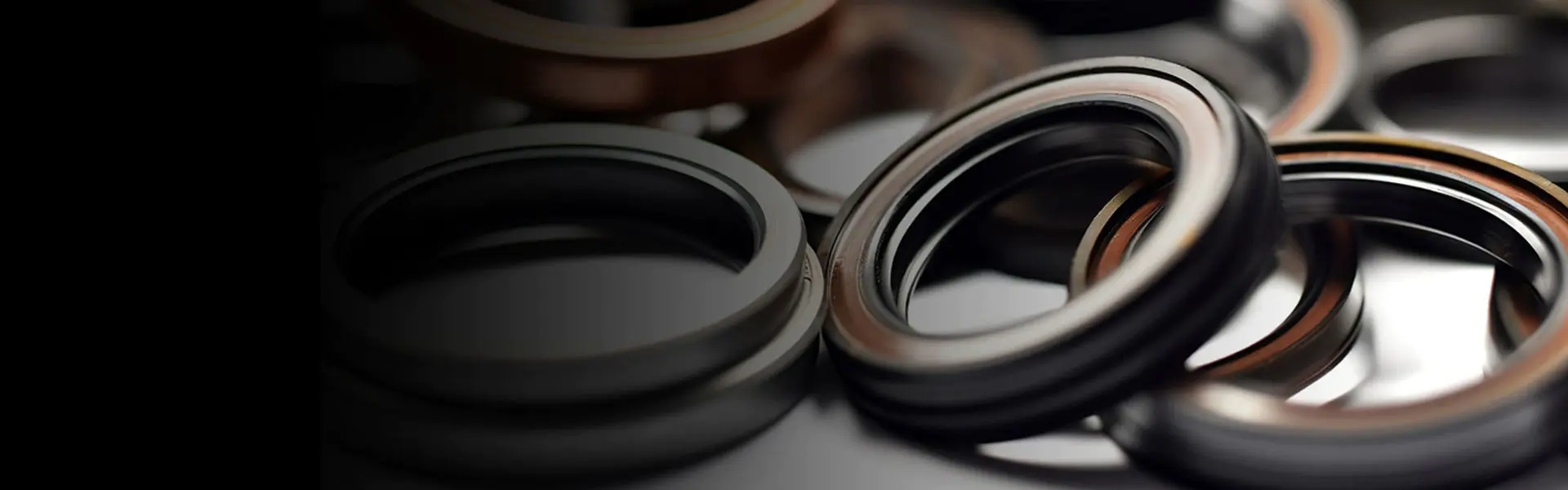
Copper gaskets are sealing components crafted from high-purity copper or copper alloys. They are engineered to create a secure, leak-proof seal between two mating surfaces, typically under conditions of high temperature, high pressure, or in corrosive environments. The inherent properties of copper—excellent thermal conductivity, malleability, and resistance to creep—make these gaskets a preferred choice in demanding industrial applications. Unlike softer materials, a copper gasket deforms under bolt load to fill microscopic imperfections on flange surfaces, ensuring a tight, reliable seal that maintains integrity over countless thermal cycles.
The unique characteristics of copper gaskets make them indispensable across several critical industries:
At Kaxite, we specialize in manufacturing premium copper gaskets that meet the most stringent industry standards. Our gaskets are not just commodities; they are precision-engineered safety components. We utilize only certified, high-grade copper materials (C10100, C10200, C11000) and employ advanced manufacturing techniques like CNC machining and precision stamping to ensure dimensional accuracy and consistent performance. Every Kaxite copper gasket undergoes rigorous quality control checks for material purity, hardness, and surface finish, guaranteeing a perfect seal right out of the box and exceptional longevity in service.
Our standard product range is designed to cover a vast array of industrial needs. The following parameters define the core of our offering.
| Material Grade | Common Name | Copper Purity (%) | Typical Hardness (Rockwell B) | Key Characteristic |
|---|---|---|---|---|
| C10100 | Oxygen-Free Electronic (OFE) | 99.99% min | 45 - 65 | Highest conductivity, excellent corrosion resistance |
| C10200 | Oxygen-Free (OF) | 99.95% min | 40 - 75 | Superior ductility and thermal conductivity |
| C11000 | Electrolytic Tough Pitch (ETP) | 99.90% min | 50 - 80 | Excellent formability, most widely used |
| C12200 | Phosphorus Deoxidized (DHP) | 99.90% min | 55 - 85 | Excellent welding and brazing properties |
Kaxite copper gaskets can be produced in virtually any size and profile. Below are tolerances for common flat ring-type gaskets.
| Dimension | Standard Tolerance (mm) | Precision Tolerance (mm) | Notes |
|---|---|---|---|
| Inner Diameter (ID) | ±0.25 | ±0.10 | Tighter tolerances available for critical fits. |
| Outer Diameter (OD) | ±0.30 | ±0.13 | Ensures proper fit within flange recess. |
| Thickness | ±0.05 | ±0.025 | Critical for controlled compression and seal load. |
| Surface Finish (Ra) | 1.6 - 3.2 µm | 0.8 - 1.6 µm | Smoother finish for enhanced sealing on polished flanges. |
| Performance Metric | Typical Range for Kaxite Gaskets | Test Standard |
|---|---|---|
| Maximum Temperature (Continuous) | 450°C (842°F) | ASTM E228 |
| Minimum Temperature (Cryogenic) | -250°C (-418°F) | ASTM E228 |
| Maximum Pressure Rating | 10,000 psi (689 bar) | ASME B16.20 |
| Thermal Conductivity | 385 - 400 W/m·K | ASTM E1225 |
| Yield Strength (Annealed) | 70 - 365 MPa | ASTM E8/E8M |
Q: When should I choose a copper gasket over a graphite or rubber gasket?
A: Choose a copper gasket for applications involving extreme temperatures (both high and cryogenic), high pressure, or where excellent thermal conductivity is required. They are also preferred for static seals in oxidizing environments and for high-vacuum applications. Rubber and graphite gaskets may degrade at high temps or lack the structural strength for high bolt loads. Copper’s malleability allows it to seal on less-than-perfect flange finishes better than harder metal gaskets.
Q: Do copper gaskets require a sealant or coating?
A: Generally, high-quality copper gaskets like those from Kaxite do not require additional sealants for most applications. The metal’s inherent plasticity creates the seal. However, in some low-pressure gas services or for corrosive fluids, a thin application of high-temperature anti-seize compound or a proprietary coating can enhance performance and prevent galling. We recommend consulting our engineering team for specific service advice.
Q: Are copper gaskets reusable?
A: Copper gaskets are typically considered one-time-use, or "crush" gaskets. Their sealing action relies on permanent deformation (compression) to flow into surface irregularities. Once disassembled, the gasket has lost its original height and sealing force profile. Reusing it risks a leak. For critical applications, always install a new, uncompressed Kaxite copper gasket to ensure system integrity and safety.
Q: How do I determine the correct thickness for my copper gasket?
A: The correct thickness depends on flange type, surface finish, bolt load, and internal pressure. A thicker gasket can accommodate more flange distortion but requires higher bolt torque to achieve proper compression. For standard raised face (RF) flanges, common thicknesses range from 1.5mm (1/16") to 3.0mm (1/8"). For ring-type joint (RTJ) or special seals, dimensions are precisely defined by standards like ASME B16.20. Our technical support can help you calculate the optimal thickness.
Q: Can Kaxite produce custom copper gaskets outside standard sizes?
A: Absolutely. Customization is a core strength at Kaxite. We manufacture copper gaskets in non-standard IDs, ODs, thicknesses, and complex cross-sections (e.g., oval, square, double-jacket). We can also provide special features like alignment tabs, custom coatings (nickel, tin, silver plating), or specific heat treatments (annealed, hardened) to meet unique operational requirements. Submit your drawings or specifications for a prompt quotation.
Q: What is the difference between annealed and hard temper copper in gaskets?
A: Annealed copper is soft and highly malleable, allowing it to conform easily to flange surfaces with lower bolt torque. It is ideal for sealing on flanges with minor imperfections. Hard temper copper has higher strength and spring-back, useful in applications with high internal pressure or where gasket blow-out is a concern. Kaxite supplies both, and the choice depends on your specific pressure/temperature/flange condition. Annealed is more common for general sealing purposes.
Q: How should copper gaskets be stored and handled before installation?
A: Store Kaxite copper gaskets in a clean, dry environment to prevent oxidation or contamination. Handle them with clean gloves to avoid transferring oils or debris onto the sealing surfaces. Inspect the gasket for any dents, scratches, or oxidation before installation. Light surface oxidation (tarnish) is normal and does not impair function, but heavy scaling or pitting should be avoided.


