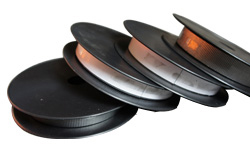

In the demanding world of industrial manufacturing, maintenance, and assembly, achieving a perfect, reliable seal is not just a preference—it's a requirement for safety, efficiency, and longevity. This is where Gasket Tape comes into play. Unlike pre-cut gaskets that require specific tooling and exact sizing, gasket tape is a versatile, form-in-place sealing solution. It is a continuous strip of compressible material, often coated with an adhesive backing, designed to be cut to length and applied directly to flanges, covers, doors, and housings to create a custom seal on demand. Kaxite's formulation of gasket tape is engineered to fill surface imperfections, compensate for minor misalignments, and provide a consistent barrier against environmental contaminants such as dust, water, moisture, air, and even certain chemicals.
The primary advantage of using a high-quality gasket tape like that from Kaxite lies in its adaptability and ease of use. It eliminates inventory issues associated with stocking numerous pre-formed gaskets, reduces assembly time, and allows for on-the-spot repairs and prototyping. From HVAC systems and electrical enclosures to automotive applications and machinery assembly, gasket tape serves as a first line of defense against leaks and ingress, ensuring operational integrity.
To select the right sealing product for your application, understanding its technical parameters is crucial. Kaxite Gasket Tape is manufactured to precise standards, offering a range of options to meet diverse industrial needs. Below are the detailed specifications presented in both a list for quick reference and a table for comparative analysis.
| Product Code | Thickness | Width | Core Density | Primary Application |
|---|---|---|---|---|
| KT-GT-125 | 1/32" (0.8mm) | 1/4", 1/2", 1" | Low (~12 lb/ft³) | Light-duty sealing on smooth surfaces, electrical cabinet doors. |
| KT-GT-250 | 1/16" (1.6mm) | 3/8", 3/4", 1.5" | Medium (~18 lb/ft³) | General purpose industrial sealing, HVAC access panels, machinery guards. |
| KT-GT-500 | 1/8" (3.2mm) | 1/2", 1", 2" | High (~25 lb/ft³) | Heavy-duty applications, irregular surfaces, outdoor equipment, transportation. |
| KT-GT-EC | 1/16" (1.6mm) | 1/2", 3/4" | Medium | EMI/RFI shielding gasketing with embedded conductive particles. |
This data ensures that engineers, maintenance supervisors, and procurement specialists can make an informed decision based on the specific gap-filling, pressure, and environmental requirements of their project.
Q: How do I properly prepare a surface before applying Kaxite Gasket Tape?
A: Surface preparation is critical for maximum adhesion and seal longevity. First, ensure the surface is completely clean, dry, and free of oil, grease, dust, rust, and old adhesive residue. Use a degreaser like isopropyl alcohol and a clean, lint-free cloth. For optimal results, the surface temperature should be above 50°F (10°C) during application. Roughening very smooth surfaces (e.g., polished metal) with fine-grit sandpaper can improve mechanical bonding.
Q: Can Kaxite Gasket Tape be used for outdoor or UV-exposed applications?
A: Our standard closed-cell polyethylene gasket tape offers excellent resistance to moisture, mildew, and many chemicals, making it suitable for sheltered outdoor use. However, for continuous, direct exposure to sunlight and UV rays, we recommend specifying our UV-resistant variant (KT-GT-UV). Prolonged UV exposure can degrade the foam and adhesive on standard tapes over time.
Q: What is the difference between open-cell and closed-cell foam in gasket tapes, and which does Kaxite use?
A: Open-cell foam has interconnected pores, making it softer, more compressible, and breathable, but it can absorb liquids. Closed-cell foam has sealed, independent bubbles, making it non-absorbent, more resistant to compression set, and better for sealing against liquids and gases. Kaxite gasket tapes primarily use closed-cell cross-linked polyethylene foam, providing superior moisture resistance, durability, and a consistent recovery rate after compression.
Q: How much compression should I apply when installing a gasket tape?
A: Typically, a gasket tape should be compressed to 25-50% of its original thickness to ensure the foam cells exert sufficient pressure against both sealing surfaces. For example, a 1/8" (3.2mm) thick tape should be compressed to a final gap of approximately 1/16" to 3/32". Over-compression can stress the foam and adhesive, leading to premature failure, while under-compression may not achieve an effective seal.
Q: Is Kaxite Gasket Tape resistant to solvents, oils, and fuels?
A: Our standard polyethylene foam tape exhibits good resistance to water-based fluids, mild acids, and alkalis. However, it is not recommended for continuous contact with strong solvents, concentrated oils, gasoline, or diesel fuel, as these can cause swelling or degradation. For such applications, we offer specialty tapes made from materials like nitrile rubber or fluorosilicone. Please contact our technical support with your specific chemical exposure details.
Q: How do I remove gasket tape residue if I need to replace a seal?
A: To remove old tape, peel it back slowly at a 180-degree angle. Any remaining adhesive residue can typically be dissolved using a citrus-based or adhesive remover solvent. Apply the solvent, allow it to penetrate for a few minutes, then gently scrape or wipe the residue away with a plastic scraper or cloth. Always test the solvent on a small, inconspicuous area first to ensure it does not damage the substrate.
Q: Can the tape be spliced or butted together for sealing large perimeters?
A: Yes. For sealing very long perimeters, you can cut multiple lengths of tape. When applying, butt the ends together as tightly as possible without overlapping them. A clean, square cut will provide the least noticeable seam. For critical high-pressure or vacuum seals, we recommend using a continuous piece or designing the joint at a corner where the seam is under less direct stress.
The versatility of Kaxite Gasket Tape makes it a staple across numerous sectors. Its primary function is to create a reliable seal, but it also provides vibration damping, sound insulation, and cushioning.
To preserve the performance and shelf life of Kaxite Gasket Tape, proper storage is essential. Rolls should be stored in their original packaging in a cool, dry place away from direct sunlight, heat sources, and high humidity. The ideal storage temperature is between 50°F and 80°F (10°C and 27°C). Store rolls flat or on their side to prevent deformation. Under these conditions, the product will maintain its adhesive and foam properties for a minimum of 24 months from the date of manufacture. Always handle the tape with clean hands or gloves to avoid transferring oils or dirt to the adhesive surface.