
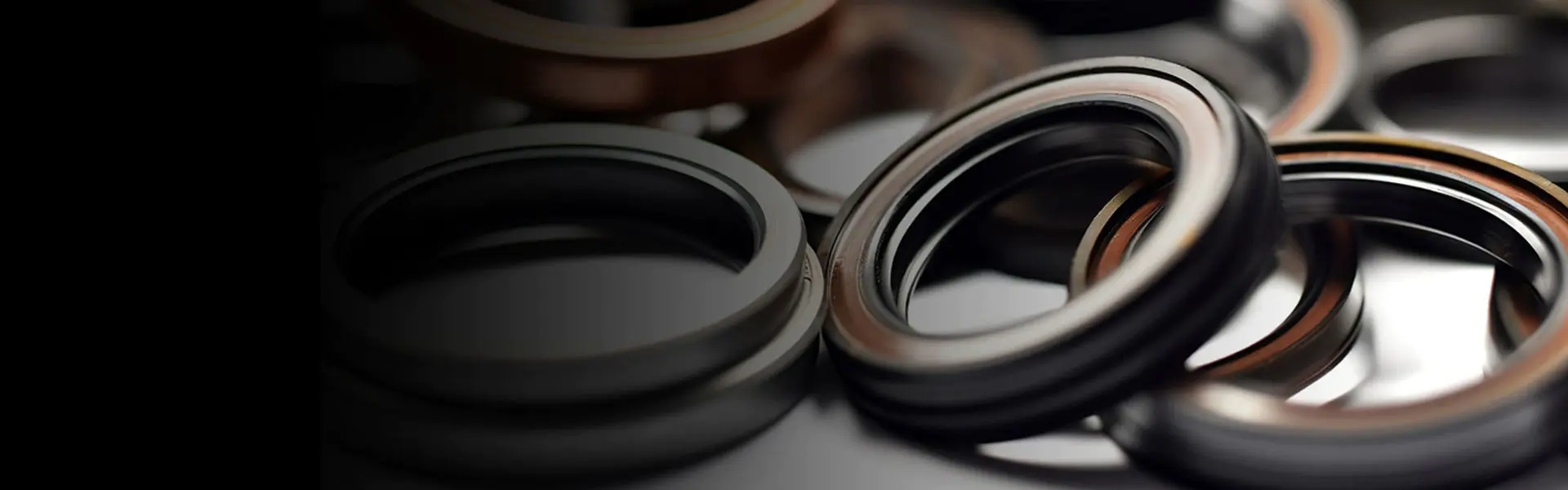
In the complex world of industrial machinery and piping systems, preventing leaks at the joints between components is not just a preference; it's a critical requirement for safety, efficiency, and environmental compliance. This is where the humble yet indispensable gasket comes into play. A gasket is a mechanical seal designed to fill the space between two or more mating surfaces, preventing leakage from or into the joined objects while under compression. At Kaxite, we have dedicated decades to mastering the science and engineering behind these vital components, providing solutions that stand up to the most demanding conditions.
The primary function of a gasket is to create a static seal. It must maintain this seal under various pressures, temperatures, and chemical exposures. The choice of material is paramount and depends entirely on the specific application's operating environment.
Kaxite offers a comprehensive portfolio of gasket materials and designs. Below is a detailed breakdown of our key product categories with their technical specifications.
These are versatile, general-purpose gaskets made from fibers (aramid, cellulose, glass) bonded with elastomers. They are suitable for a wide range of applications involving water, steam, oils, and mild chemicals.
| Material Grade | Primary Composition | Temperature Range | Pressure Range | Typical Applications |
|---|---|---|---|---|
| Kaxite Blue-Gard 3000 | Aramid fiber, NBR binder | -40°F to 400°F (-40°C to 204°C) | Up to 1500 psi | General water, oil, and fuel services |
| Kaxite Steam-Seal 1500 | Cellulose fiber, SBR binder | Up to 350°F (177°C) | Up to 1200 psi | Saturated steam, hot water |
| Kaxite Chem-Block FR | PTFE coated glass fiber | -100°F to 500°F (-73°C to 260°C) | Up to 1000 psi | Aggressive chemicals, acids, caustics |
Made from various elastomers, these gaskets offer excellent flexibility and sealability on flanges with low bolt loads.
| Elastomer Type | Key Properties | Temperature Range | Media Resistance | Kaxite Product Code |
|---|---|---|---|---|
| Nitrile Rubber (NBR) | Excellent oil and fuel resistance | -40°F to 250°F (-40°C to 121°C) | Oils, fuels, water, hydraulic fluids | KAX-NBR Series |
| Ethylene Propylene Diene (EPDM) | Superior weather, ozone, and steam resistance | -60°F to 300°F (-51°C to 149°C) | Hot water, steam, alkalis, mild acids | KAX-EPDM Series |
| Fluoroelastomer (FKM/Viton®) | Exceptional high-temperature and chemical resistance | -20°F to 400°F (-29°C to 204°C) | Oils, fuels, acids, aromatics, hydrocarbons | KAX-FKM Series |
| Silicone (VMQ) | Wide temperature flexibility, non-reactive | -80°F to 450°F (-62°C to 232°C) | Air, ozone, some oils (fair) | KAX-VMQ Series |
Polytetrafluoroethylene (PTFE) offers near-universal chemical resistance and excellent performance in corrosive services.
For high-pressure, high-temperature (HPHT) applications such as those in the oil & gas, power generation, and chemical processing industries.
| Gasket Type | Construction | Pressure Rating | Temperature Limit | Key Feature |
|---|---|---|---|---|
| Spiral Wound Gasket (SWG) | Alternating layers of metal (304SS, 316SS, Inconel) and filler (graphite, PTFE) | Up to 20,000 psi+ | Up to 1500°F (816°C) with graphite filler | Excellent resilience and recovery; standard for ASME B16.5/B16.47 flanges |
| Ring Type Joint (RTJ) | Solid metal ring (soft iron, various alloys) with oval or octagonal cross-section | Extremely High (API 6A/17D) | Depends on metal grade | Seals by high initial line contact; used in wellhead and tree equipment |
| Metal Jacketed Gasket | Soft filler (asbestos, graphite) enclosed in a metal jacket (stainless steel, Monel) | High | Up to 1200°F (649°C) | Good for heat exchangers, reactors, and vessels with large diameters |
| Kammprofile / Grooved Gasket | Metal core with concentric grooves, faced with a soft sealing layer (graphite, PTFE) | Very High | Up to 1500°F (816°C) with graphite | Low bolt load requirement, high sealability, reusable core |
A gasket must match the flange specifications precisely. Kaxite manufactures gaskets to all major international standards.
Key dimensions include Inner Diameter (ID), Outer Diameter (OD), thickness, and for flanged gaskets, the bolt circle diameter and number of bolt holes.
Q: How do I select the right gasket material for my application?
A: Selection is based on the "PITT" criteria: Pressure, Internal Media (chemical compatibility), Temperature, and flange/surface Type. Start by identifying the most aggressive condition (e.g., highest temperature or most corrosive chemical) and choose a material rated for it. Consider bolt load capabilities of the flange. Kaxite provides detailed chemical resistance charts and technical data sheets for all our materials to guide this process.
Q: What is the difference between a static seal and a dynamic seal?
A: A static seal, like a flange gasket, is used between surfaces that do not move relative to each other. A dynamic seal (like an O-ring or lip seal in a rotating pump shaft) is used where there is movement. Using a static gasket in a dynamic application will lead to rapid failure and leakage.
Q: Why is surface finish on the flange important for gasket performance?
A: The flange surface finish provides the mechanical "bite" for the gasket to seal. A finish that is too rough (e.g., coarse machining) can prevent the gasket from flowing into the imperfections to create a seal. A finish that is too smooth (e.g., polished) may not provide enough friction to hold the gasket in place and can lead to creep. A serrated concentric or phonographic (spiral) finish between 125-250 microinches Ra is typical for most industrial applications.
Q: What is bolt torque, and why is proper torque sequence critical?
A: Bolt torque is the rotational force applied to a bolt to create clamp load, which compresses the gasket to form a seal. Using a proper crisscross (star) pattern sequence in multiple incremental steps (e.g., 30%, 60%, 100% of final torque) ensures even compression of the gasket. Uneven torque can distort the flange and create uneven gasket stress, leading to leaks. Always follow the equipment manufacturer's or gasket supplier's recommended torque values.
Q: Can I reuse a gasket?
A: As a general rule, gaskets are designed for single use. During installation, the material compresses and conforms to the specific imperfections of the flange faces. Once disassembled, this "set" is lost, and the material's recovery properties may not be sufficient to re-seal effectively. Reusing a gasket significantly increases the risk of a leak. Kaxite always recommends using a new gasket for critical joints.
Q: What causes a gasket to blow out or fail prematurely?
A: Common causes include: 1) Material Incompatibility: Chemical attack or temperature degradation. 2) Improper Installation: Insufficient or uneven bolt torque, misalignment, or damaged flange faces. 3) Incorrect Gasket Selection: Using a soft material for high pressure or a material with poor creep resistance for sustained high temperature. 4) System Upsets: Rapid pressure spikes (water hammer) or thermal cycling beyond the gasket's design limits.
Q: What is the difference between a full-face and an inside-bolt-circle (IBC) gasket?
A: A full-face gasket covers the entire flange face, including the bolt holes. It is typically used with flat-faced (FF) flanges. An IBC (or raised face, RF) gasket sits inside the ring of bolts and matches the raised sealing surface of the flange. The flange type specified in your system design dictates which gasket style you must use.
Q: How does Kaxite ensure the quality and consistency of its gaskets?
A: Kaxite employs a rigorous quality management system certified to ISO 9001. Our process includes: raw material certification and batch testing, controlled manufacturing environments, in-process dimensional checks using calibrated instruments, and final inspection against customer specifications and relevant standards (ASME, API, DIN). Traceability is maintained from raw material to finished product for critical applications.


