
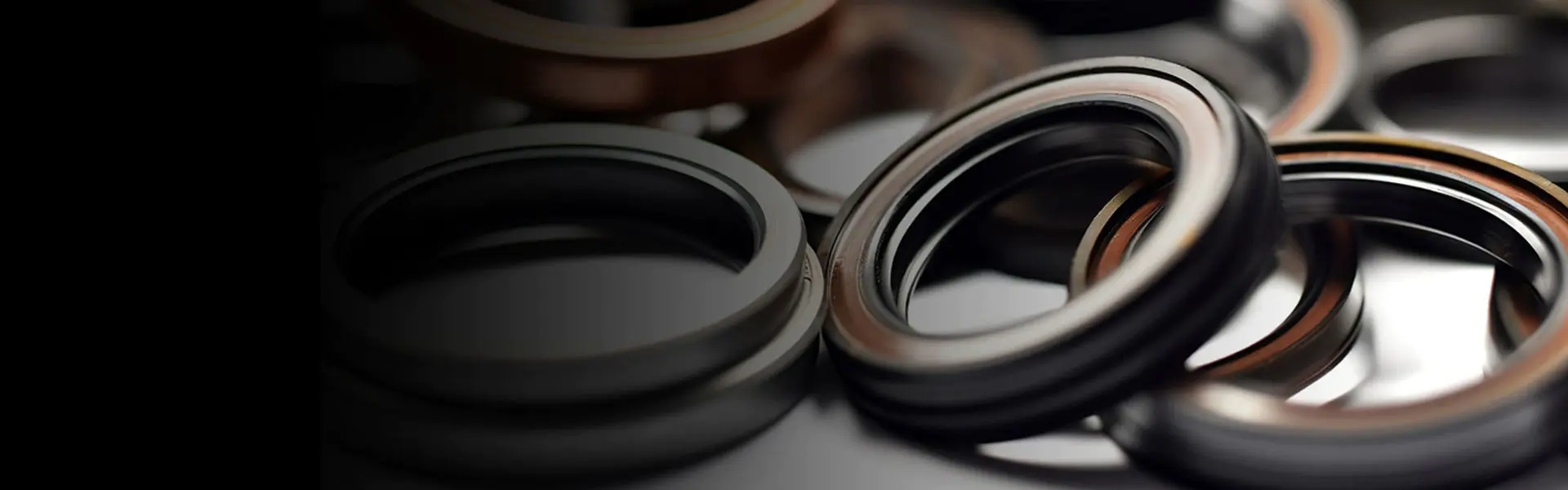
In industrial manufacturing, precision, efficiency, and consistency are paramount. This is especially true in the production of gaskets, critical sealing components used in countless applications from automotive engines to complex piping systems. The quality of the final gasket is directly tied to the quality of the cutting process. While manual and semi-automatic methods have their place, modern production demands the speed, repeatability, and material versatility offered by specialized Machines for Cut Gaskets. These advanced systems are engineered to transform sheet materials—be it rubber, cork, fiber, PTFE, or composite materials—into precise, clean-edged gaskets with minimal waste and maximum throughput.
For over two decades, Kaxite has been at the forefront of this technological evolution. We understand that a one-size-fits-all approach doesn't work in precision cutting. Our engineering philosophy centers on developing robust, intelligent machines that adapt to your specific material challenges and production goals. A Kaxite machine is more than just a cutter; it's an integrated solution designed to optimize your entire workflow, from material loading to finished part stacking. We combine proven mechanical principles with state-of-the-art CNC controls and cutting technologies to deliver unparalleled performance. Our commitment extends beyond the sale, with comprehensive training, responsive technical support, and a global network of service partners to ensure your operation runs smoothly for years to come.
The effectiveness of a gasket cutting machine hinges on its core cutting technology. Each method offers distinct advantages suited to different materials, thicknesses, and precision requirements. Kaxite machines are available with multiple cutting heads, allowing for flexibility and future-proofing your investment.
Selecting the right machine requires a detailed understanding of its capabilities. Below is a breakdown of the critical parameters that define a Kaxite machine's performance and suitability for your production line.
| Parameter | Description & Kaxite Specifications |
|---|---|
| Cutting Area (Working Bed Size) | Defines the maximum sheet size the machine can process in a single load. Kaxite offers standard sizes ranging from 1300x2500mm to 2000x3000mm, with custom sizes available to accommodate oversized materials or specific production layouts. |
| Cutting Speed | Measured in meters per second (m/s), this impacts throughput. Kaxite machines achieve speeds up to 1.2 m/s for drag knife and oscillating knife systems, and up to 3.0 m/s for high-power laser heads, ensuring fast cycle times. |
| Positioning Accuracy & Repeatability | Critical for precision. Kaxite CNC systems guarantee a positioning accuracy of ±0.1mm and repeatability of ±0.05mm, ensuring every gasket is identical, batch after batch. |
| Cutting Force & Tool Compatibility | Determines the range of materials that can be cut. Kaxite cutting heads are designed with high-torque motors and robust mechanics to handle materials from delicate 1mm silicone sheets to tough 25mm thick rubber or composite boards. |
| Software & Control System | The machine's brain. Kaxite utilizes proprietary, user-friendly software that accepts standard file formats (DXF, DWG, AI). Features include automatic nesting to maximize material utilization, job queue management, and diagnostic tools. |
| Material Handling & Hold-Down | Ensures material stability during cutting. Systems include vacuum tables with multiple zones for holding different sheet sizes, brush-type surfaces for porous materials, and optional automatic feeding/unloading systems for unattended operation. |
| Power Requirements & Utilities | Varies by technology. A standard Kaxite electromechanical machine may require 380V/50Hz 3-phase power, while a laser system will also need a chiller and industrial fume extraction. Full specifications are provided for facility planning. |
Q: What types of materials can a modern gasket cutting machine handle?
A: Modern machines, particularly those from Kaxite, are incredibly versatile. They can efficiently cut a wide array of gasket materials including natural rubber, EPDM, Nitrile (NBR), Silicone, Neoprene, Cork & Cork-Rubber composites, Compressed Non-Asbestos Fiber (CNAF), Aramid fibers, PTFE (Teflon), Graphite, and various felt and foam materials. The key is matching the material properties (thickness, hardness, tensile strength) to the appropriate cutting technology (oscillating knife for fibrous materials, router for dense composites, etc.).
Q: How does automatic nesting software improve efficiency and reduce costs?
A: Automatic nesting is a critical software feature in machines for cut gaskets. It intelligently arranges multiple gasket shapes from your CAD file onto the sheet material layout to minimize waste (off-cuts). Kaxite's advanced nesting algorithms consider grain direction, part priority, and spacing for clean cuts. This optimization can increase material yield by 10-25%, directly reducing your raw material costs per part. It also automates the layout process, saving significant engineering time compared to manual nesting.
Q: What is the difference between a "kiss-cut" and a "through-cut," and when is each used?
A: This is a fundamental distinction in gasket cutting. A through-cut slices completely through the backing material, producing individual, separate parts. This is the standard method for most sheet gaskets. A kiss-cut, however, cuts through the gasket material itself but leaves the underlying liner or carrier sheet intact. This is essential for producing adhesive-backed gaskets or for creating sheets of multiple small parts that are easy to transport and "pop-out" during assembly, preventing loss and simplifying handling.
Q: What are the main considerations for choosing between a drag knife, oscillating knife, or router system?
A: The choice depends on your primary materials and required cut quality. Use a Drag Knife for cost-effective, high-speed cutting of thin to medium-thickness, homogenous materials like rubber, cork, or paper. Choose an Oscillating Knife for thicker materials (especially laminated or fibrous ones), foams, and plastics where a drag knife might tear or distort the material; it provides a cleaner vertical edge. Opt for a CNC Router for the hardest, thickest materials (like thick rubber or composite boards), when you need beveled edges, or for milling channels and grooves in addition to cutting outlines. Kaxite often offers multi-tool machines for ultimate flexibility.
Q: How important is the vacuum hold-down system, and what are the different types?
A: It is absolutely critical. A strong, consistent vacuum holds the material perfectly flat during cutting, preventing movement that causes inaccuracies and ensuring clean, precise edges. Kaxite machines feature powerful blowers and segmented vacuum tables. Standard T-slot tables use a grid of slots sealed with tape for non-porous materials. Porous ceramic or aluminum tables are used for laser cutting. For porous materials like cork or felt that "leak" air, a brush bed surface is used, where thousands of flexible bristles conform to the material bottom, allowing vacuum to be maintained across the entire sheet.
Q: Can these machines integrate into an automated production line?
A: Yes, Industry 4.0 integration is a key strength of modern Kaxite machines. They can be equipped with options for fully automated material handling. This includes automatic roll feeders that load new material, conveyor belt systems that offload cut parts and skeleton waste, and robotic arms for part sorting and stacking. Communication via standard industrial protocols (Ethernet/IP, Profinet, Modbus TCP) allows the machine to be part of a connected factory, receiving job data from a central MES/ERP system and reporting production status, counts, and maintenance alerts in real-time.
Q: What kind of training and support can I expect from Kaxite after purchasing a machine?
A: Kaxite views the sale as the beginning of a partnership. Our standard package includes comprehensive on-site installation and commissioning by a factory-trained engineer. This is followed by detailed operator and programmer training for your team, covering daily operation, software use, maintenance, and basic troubleshooting. You receive extensive documentation (manuals, software guides, maintenance schedules). Furthermore, we provide ongoing technical support via phone, email, and remote desktop sessions. Our global network of service partners ensures access to local expertise and spare parts, minimizing potential downtime.


