
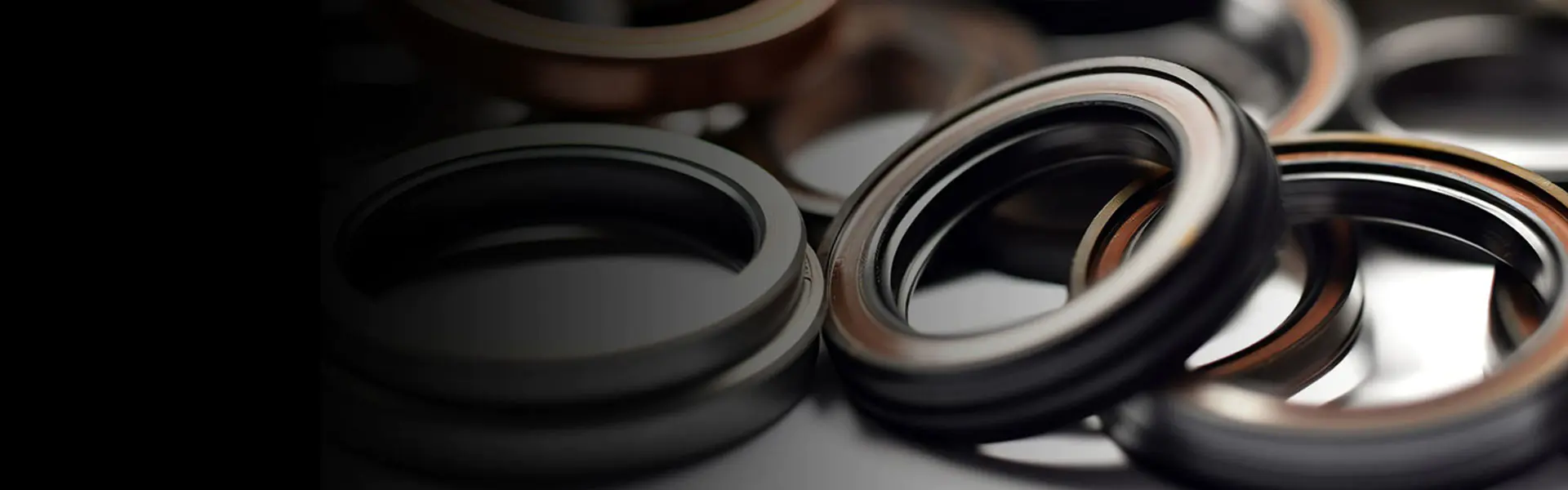
It is 2 a.m. when your plant manager calls about a leaking heat exchanger flange. Production is already throttling, maintenance crews are on standby, and you must confirm the replacement gasket specification before the next shift. The first technical question that comes up is What materials are used in double jacket gaskets? Get this wrong, and you risk repeated leaks, unplanned downtime, and costly emergency orders. Double jacket gaskets are not a single material product. They combine a metal outer shell, typically stainless steel, carbon steel, titanium, or Inconel, with a compressible filler core such as flexible graphite, PTFE, ceramic fiber, or mica. The shell provides structural strength and blowout resistance, while the filler creates the tight seal under uneven flange surfaces and thermal cycling. Even a small mismatch in filler material can shorten gasket life from five years to five months. Buyers often ask this question after experiencing repeated failures with generic graphite-filled gaskets that were never validated for their specific media. For procurement teams, understanding these material combinations is the fastest way to move from urgent troubleshooting to long-term reliability. Ningbo Kaxite Sealing Materials Co., Ltd. specializes in matching the right shell and filler to your exact pressure, temperature, and chemical conditions.

Table of Contents
When a buyer sees "double jacket gasket" on a data sheet without detailed material certification, it often means a difficult mechanical seal decision. Some suppliers only list "stainless steel" without grade, or "graphite filler" without purity level. For a heat exchanger running sour gas at 380°C, this ambiguity can lead to shell corrosion and filler breakdown within months.
Always request the exact shell and filler specification. The outer shell is usually made from 304 stainless steel for general service, 316L stainless steel for chloride resistance, carbon steel for non-corrosive low-temperature service, titanium for seawater or aggressive chloride media, and Inconel for extreme temperature and corrosion combinations. The filler core is commonly flexible graphite for high-temperature sealing, PTFE for chemical inertness, ceramic fiber for very high temperature, and mica for oxidative resistance.
| Material Layer | Common Options | Typical Temperature Limit | Best For |
|---|---|---|---|
| Outer Shell | 304 SS, 316L SS, Carbon Steel, Titanium, Inconel | Up to 1000°F (Inconel) | Structural strength, blowout resistance |
| Filler Core | Flexible graphite, PTFE, Ceramic fiber, Mica | Up to 1200°F (Mica/Ceramic) | Compressibility, tight sealing |
This is not a commodity purchase. Asking the right material questions before ordering can prevent a mismatch that costs thousands in downtime.
A chemical plant replaced its heat exchanger gaskets three times in one year. The original gaskets were cheap carbon steel jackets with low-purity graphite filler. Under thermal cycling, the shell cracked and the filler oxidized, causing flange face pitting and leakage.
Match the combination to the failure mode. For thermal cycling above 300°C, choose a 316L stainless steel shell with 99% purity flexible graphite filler. The graphite absorbs movement without losing resilience, while 316L resists corrosion from condensation. For strong acids or solvents, specify a PTFE filler with a 316L or titanium shell. This combination eliminates chemical attack and provides a tight seal at lower bolt loads. If oxidation is the issue, mica-filled double jacket gaskets with Inconel shells outperform standard graphite in air-rich environments.
| Failure Mode | Recommended Combination | Pressure Class | Expected Benefit |
|---|---|---|---|
| Thermal cycling leakage | 316L shell + flexible graphite | 150# to 600# | High recovery, longer seal life |
| Chemical attack | 316L or titanium shell + PTFE | 150# to 300# | Inertness, clean service |
| Oxidation at high heat | Inconel shell + mica filler | 300# to 600# | Stable sealing in air-rich streams |
Ningbo Kaxite Sealing Materials Co., Ltd. provides material validation reports and can recommend combinations based on actual operating data, not just generic catalogs.
Maintenance teams sometimes use spiral wound gaskets in flanges designed for double jacket gaskets. The result is often poor seating, because double jacket gaskets have a smooth metal exterior that sits neatly into flat or raised face flanges, while spiral wound gaskets need a centering ring or controlled compression. Procurement gets blamed for ordering the wrong part, but the root cause is a material and geometry mismatch.
Know when double jacket gaskets make sense. They are excellent for heat exchangers with narrow sealing surfaces, low-to-moderate bolt load, and frequent disassembly. Spiral wound gaskets offer better blowout resistance for very high pressure but require more precise flange alignment. From a material standpoint, double jacket gaskets use a solid metal shell that protects the filler from direct media contact, which simplifies cleaning and reduces media entrapment. For many heat exchanger OEMs, double jacket remains the preferred style because it tolerates uneven flange surfaces better.
| Gasket Type | Structure | Pressure Range | Relative Cost | Maintenance Frequency |
|---|---|---|---|---|
| Double Jacket | Metal shell + soft filler | 150# to 600# | Moderate | Low in correct service |
| Spiral Wound | Wound metal strip + filler | 150# to 2500# | Moderate to high | Higher if misaligned |
When your current spiral wound gaskets keep leaking on a heat exchanger, Ningbo Kaxite Sealing Materials Co., Ltd. can review the flange drawings and recommend a double jacket configuration with the correct metal and filler combination.
Q: What materials are used in double jacket gaskets for high-temperature heat exchangers?
A: For high-temperature service, the most reliable double jacket gasket materials are a stainless steel or Inconel outer shell combined with flexible graphite or mica filler. Flexible graphite can typically handle continuous service up to 450°C in steam applications, while mica-filled constructions extend oxidative resistance to around 600°C. The shell material must match the thermal expansion of the flange; 316L stainless steel is common for oxidation resistance, and Inconel is used for extreme thermal cycling.
Q: What materials are used in double jacket gaskets when chemical compatibility is critical?
A: When the medium is aggressive, the best material combination is often a 316L stainless steel or titanium outer shell with a PTFE filler. PTFE resists strong acids, alkalis, and many solvents, while titanium withstands chloride-rich environments such as seawater. For mixed chemical streams, buyers should also request corrosion test data from the manufacturer. Ningbo Kaxite Sealing Materials Co., Ltd. supplies certified PTFE-filled double jacket gaskets with shell grades matched to the specific chemical list.
A project buyer in Southeast Asia ordered double jacket gaskets from a low-cost source, but the shipment arrived without material test certificates, and the shell thickness was below specification. The gaskets deformed during torqueing and had to be replaced, delaying the heat exchanger start-up by ten days.
Work with a sealing manufacturer that treats material selection as an engineering service. Ningbo Kaxite Sealing Materials Co., Ltd. helps procurement teams by reviewing operating temperature, pressure, chemical media, and flange type before production. The company provides full material traceability, including shell and filler certifications, dimensional inspection reports, and third-party testing when required. Custom sizes and material combinations are available for heat exchangers, boilers, condensers, and pressure vessels.
| Support Service | What It Covers | Benefit to Buyer |
|---|---|---|
| Material recommendation | Shell and filler selection based on media, temp, pressure | Reduces mismatch risks |
| Certification pack | Mill certificates, test reports, dimensional records | Simplifies supplier qualification |
| Custom manufacturing | Non-standard sizes, multi-jacket designs, special alloys | Fits legacy or OEM flanges |
Procurement often needs a quick reference to compare specifications across suppliers. Without clear parameters, it is difficult to evaluate quotes beyond price.
Use the following baseline parameters when requesting quotations. Ningbo Kaxite Sealing Materials Co., Ltd. manufactures double jacket gaskets to common international standards and can custom-size to your drawings.
| Parameter | Standard Range | Notes |
|---|---|---|
| Outer shell thickness | 0.5–1.5 mm | Can be specified per flange finish |
| Filler thickness | 1.5–3.0 mm | Depends on compressibility needs |
| Overall gasket thickness | 2.0–5.0 mm | Common for heat exchanger flanges |
| Pressure class | 150# to 600# | Higher on request with special design |
| Temperature range | -200°C to +600°C | Depends on shell and filler combination |
| Applicable standards | ASME B16.20, API 601, DIN, JIS, HG/T | Other standards available on request |
Need help choosing the right materials for your next heat exchanger or pressure vessel sealing project? Tell us your maximum temperature, pressure, and chemical media, and our engineering team will recommend a reliable double jacket gasket construction. At Ningbo Kaxite Sealing Materials Co., Ltd., we supply industrial sealing products including double jacket gaskets, spiral wound gaskets, and PTFE-based sealing solutions. Learn more at https://www.kxt-seals.com or contact our sales team at [email protected] for a fast quotation and material selection support.
1. Smith J., 2021. Evaluation of Graphite-Filled Double Jacket Gaskets for High-Temperature Flange Joints. Journal of Pressure Vessel Technology, 143(4).
2. Chen L., Wang H., 2019. Comparative Study of Sealing Performance of Metal Jacketed Gaskets with Flexible Graphite Fillers. International Journal of Pressure Vessels and Piping, 172.
3. Miller R., 2018. Corrosion Resistance of Stainless Steel Jacket Materials in Chloride-Containing Environments. Corrosion Science, 134.
4. Davis P., Okafor I., 2020. Thermal Cycling Effects on Gasket Stress Relaxation in Heat Exchanger Flanges. Journal of Sealing Technology, 12(3).
5. Patel S., 2017. PTFE Filler Performance in Double Jacket Gaskets for Chemical Processing. Chemical Engineering Research and Design, 125.
6. Zhang Y., Liu B., 2022. Experimental Investigation on Mica-Filled Metal Jacketed Gaskets for High-Temperature Sealing. Tribology International, 166.
7. Anderson K., 2016. Comparative Analysis of Double Jacket and Spiral Wound Gaskets for Pressure Vessel Applications. Pressure Vessels and Piping Conference, 50473.
8. Garcia M., 2019. Finite Element Analysis of Metal Jacketed Gaskets Under Non-Uniform Flange Loading. Journal of Mechanical Engineering Science, 233(14).
9. Tanaka H., 2015. Sealing Behavior of Flexible Graphite in Double Jacket Gaskets at Elevated Temperatures. Journal of Nuclear Science and Technology, 52(9).
10. Roberts J., 2023. Lifecycle Cost Comparison of Sealing Solutions for Heat Exchanger Maintenance. Industrial Lubrication and Tribology, 75(2).
-


