
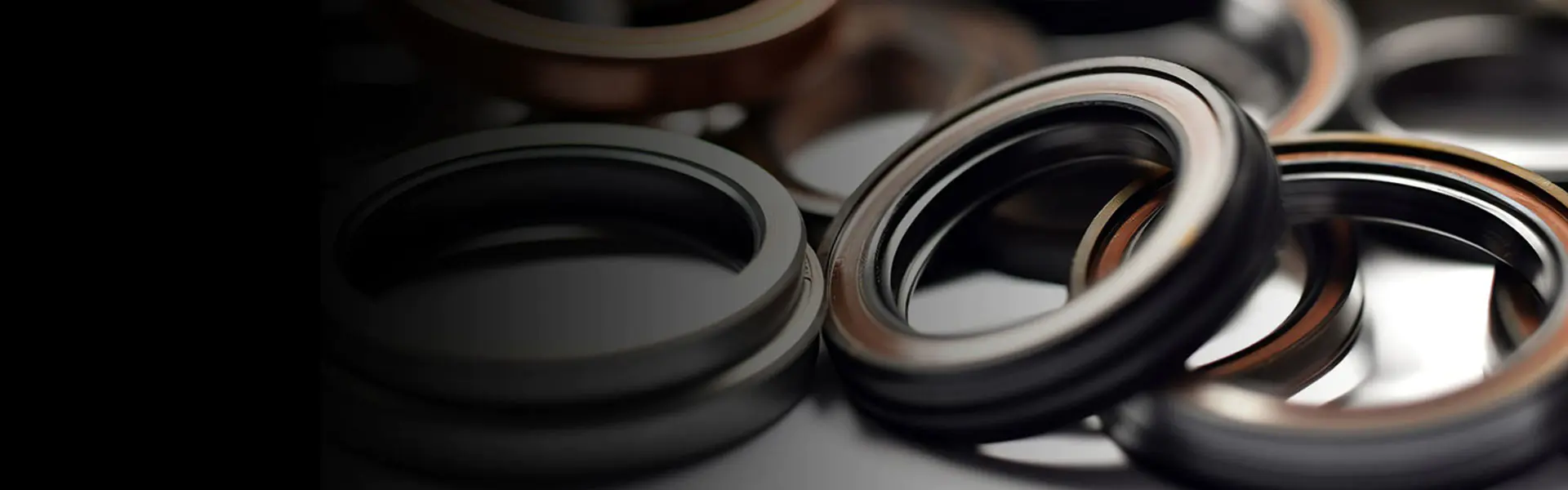
Imagine you are a procurement engineer at midnight, comparing technical drawings from three different sealing suppliers. A critical heat exchanger flange keeps leaking because the stamped jacket gasket was manufactured with inconsistent metal thickness, poor filler compression, and a weld seam that failed under thermal cycling. This is exactly the moment when the question “How is a Stamping Jacket Gasket manufactured?” stops being a textbook curiosity and becomes the difference between a $0.80 part and an $8,000 unplanned shutdown. A stamping jacket gasket is not simply punched out of sheet metal. It is an engineered two-piece or three-piece assembly: an outer metal jacket—usually soft steel, stainless steel 304/316, copper, or nickel alloy—formed through blanking, stamping, and deep drawing, and a resilient filler core such as graphite, PTFE, ceramic fiber, or non-asbestos sheet. The metal jacket provides strength, blowout resistance, and temperature capability, while the filler gives the conformable sealing surface. When the stamping process is not precisely controlled, you get burrs, uneven jacket walls, cracked flanges, and filler squeeze-out. For purchasing teams, this means supplier qualification becomes a risk-control exercise: you need to know the raw material certificates, die maintenance records, stamping tonnage, surface finish, and dimensional inspection data. Ningbo Kaxite Sealing Materials Co., Ltd. specializes in taking this complex manufacturing process and turning it into repeatable, inspectable, and cost-effective gaskets for B2B buyers. This guide breaks down the full production flow, typical sourcing pain points, key parameters, and the questions you should ask before placing an order.
Picture a maintenance manager in a food processing plant calling you at 6:00 a.m. because steam is escaping from a flange on a stainless steel line. The gasket you sourced last quarter was a cheap stamped jacket gasket with a carbon steel jacket and graphite filler. It worked for three weeks, but now the filler has extruded through the jacket seam. This is a common procurement pain: you need a gasket that combines a corrosion-resistant jacket, controlled filler compression, and a seam that will not open under thermal shock. Without understanding how a stamping jacket gasket is manufactured, it is easy to buy on price alone and miss these failure modes.
The solution starts with a supplier that controls every stage from raw material to final inspection. Ningbo Kaxite Sealing Materials Co., Ltd. uses certified raw materials and documented stamping processes, so the gasket you receive matches the drawing and the application. The table below shows common material combinations you should evaluate before ordering.

| Jacket Material | Filler Material | Maximum Continuous Temperature | Typical Application |
|---|---|---|---|
| Stainless Steel 304 | Graphite | 450°C | Steam, heat exchangers |
| Stainless Steel 316L | PTFE | 260°C | Chemical, corrosive media |
| Soft Steel | Non-asbestos | 400°C | General industrial flanges |
| Copper | Graphite | 350°C | Heat exchangers, low chloride systems |
| Nickel 200 | Mica | 900°C | High-temperature exhaust, gas turbines |
Every reliable stamping jacket gasket starts with flat metal strip, not pre-formed blanks. The manufacturing method matters because stamping introduces work hardening, residual stress, and dimensional changes. Here is how Ningbo Kaxite Sealing Materials Co., Ltd. approaches the process.
The process begins with selecting the jacket metal and filler. Each coil of stainless steel, copper, or nickel alloy is verified against mill certificates. Hardness, chemical composition, and thickness tolerance are checked before the strip is released to the stamping line. The filler—graphite, PTFE, ceramic fiber, or non-asbestos—is also inspected for density, moisture content, and compressibility.
A precision blanking die cuts the metal strip into circular or ring-shaped blanks. Depending on the gasket design, the blank may be a single flat ring that will be folded, or two separate sheets that will form the two halves of the jacket. The stamping die uses controlled clearance to minimize burrs and ensure clean edges. For deeper jacket profiles, a deep-drawing operation forms the metal into a cup or channel shape.
After the jacket halves are formed, the filler core is placed inside. The filler may be pre-cut to the exact ring shape or inserted as a compressible layer. For two-piece designs, one jacket half overlaps the other to create a closed envelope. For three-piece designs, an inner ring or grommet is added for extra blowout protection.
The jacket halves are joined by welding, spot welding, or mechanical crimping. In high-integrity designs, the seam is welded continuously to prevent filler extrusion. For lower-pressure applications, a folded and crimped seam may be sufficient. Welding parameters are controlled to avoid cracking near the edge and to maintain uniform jacket thickness.
After assembly, the gasket is deburred, cleaned, and sometimes coated with a non-stick layer. Dimensional inspection verifies outside diameter, inside diameter, thickness, and concentricity. Hardness and compression tests are performed on sample pieces from each batch. A final visual inspection checks for cracks, porosity, and filler protrusion.
| Process Parameter | Typical Range | Influence on Gasket Performance |
|---|---|---|
| Blank thickness tolerance | ±0.05 mm | Affects jacket strength and compression |
| Die clearance | 5–10% of sheet thickness | Controls burr height and edge quality |
| Weld penetration | 60–80% of jacket wall | Prevents seam opening under internal pressure |
| Surface roughness (Ra) | 1.6–3.2 µm | Optimizes conformability to flange surface |
| Compression range | 15–35% of original thickness | Ensures filler engagement without crushing |
Procurement teams often face three recurring problems: vague material descriptions, long lead times for custom sizes, and incomplete inspection reports. A buyer may receive a quote that says “SS304 with graphite” but does not specify filler purity, jacket seam type, or dimensional tolerance. When the gaskets arrive, they may fit the flange but fail after a few thermal cycles because the filler was not dense enough or the weld seam was not continuous.
The table below summarizes these pain points and the solution Ningbo Kaxite Sealing Materials Co., Ltd. provides.
| Sourcing Pain Point | Real-World Consequence | Kaxite Solution |
|---|---|---|
| No material traceability | Mixed heat numbers, inconsistent corrosion resistance | Mill certificates provided for every coil |
| Undefined filler compression | Filler extrusion or loss of bolt load | Documented compression and recovery tests per batch |
| Long lead time for custom sizes | Project delays, emergency air freight | Flexible stamping dies and fast sampling service |
| Poor packaging | Bent jackets, damaged filler, rejected incoming inspection | Individual layer packing with hardboard support |
| Missing inspection data | Buyer cannot prove compliance to end user | Full dimensional reports and material certificates |
Imagine you receive two samples from different suppliers. Both look like shiny stainless steel rings. One is 3.2 mm thick and the other is 2.8 mm thick, even though both were quoted as “3.0 mm nominal.” The difference comes from how each manufacturer controls stamping compression and filler thickness. For a bolted flange joint, that 0.4 mm difference changes the gasket seating stress and can cause leakage at start-up. This is why you need to compare the parameters in the table below before making a purchasing decision.
| Parameter | Standard or Expected Value | What It Tells You |
|---|---|---|
| Thickness tolerance | ±0.1 mm for standard sizes | Controls gasket seating stress and bolt torque |
| Hardness (jacket) | HV 120–220 for 304 SS | Indicates whether stamping caused excessive work hardening |
| Filler density | Graphite: 1.0–1.6 g/cm³ | Affects compressibility and recovery |
| Leak rate | ≤0.1 mg/s·m under test pressure | Verifies sealing performance before shipment |
| Concentricity | ≤0.5 mm deviation | Prevents misalignment on raised-face flanges |
| Seam type | Welded, crimped, or folded | Determines blowout resistance and reuse capability |
Ningbo Kaxite Sealing Materials Co., Ltd. is not just a trading company that forwards drawings to an anonymous workshop. We operate our own stamping and sealing material production lines, so every batch of stamping jacket gaskets can be traced from incoming steel coil to final packaging. Our team works with procurement engineers to select the correct jacket material, filler type, seam configuration, and dimensional tolerance for the application. We provide mill certificates, inspection reports, sample approval, and competitive pricing for both small trial orders and large-volume container shipments. If your current supplier cannot answer the question “How is a stamping jacket gasket manufactured?” with clear process documentation, it is time to switch to a source that can. Visit https://www.kxt-seals.com to review our product range and request a quotation.
For high-temperature heat exchangers, the manufacturer starts with a stainless steel or nickel alloy jacket and a graphite or mica filler. The metal strip is blanked and deep-drawn into two jacket halves, then the filler is inserted and the seam is continuously welded. After welding, the gasket is inspected for weld penetration, surface roughness, and dimensional accuracy. Ningbo Kaxite Sealing Materials Co., Ltd. provides material certificates and compression test data so you can verify the gasket will survive thermal cycling before it reaches your plant.
To prevent filler blowout, the jacket is designed with a closed envelope or a continuous welded seam rather than a simple folded edge. The filler is pre-compressed to a controlled density, and the jacket wall thickness is selected to withstand the system pressure. During manufacturing, the seam is tested for leaks or weak points. When you order from Ningbo Kaxite Sealing Materials Co., Ltd., you can request a leak test certificate and optional inner ring reinforcement for critical applications.
Your role in procurement is not just to find the lowest price; it is to prevent sealing failures that shut down production. By understanding how a stamping jacket gasket is manufactured, you can ask better questions about material certificates, dimensional control, filler compression, and seam integrity. If you are currently sourcing these gaskets and need a reliable partner, contact us today for a technical review of your drawings and a free sample recommendation.
Ningbo Kaxite Sealing Materials Co., Ltd. is a specialized manufacturer and supplier of industrial sealing products, including stamping jacket gaskets, spiral wound gaskets, PTFE gaskets, and graphite-based sealing materials. We help procurement teams worldwide reduce downtime, meet international standards, and maintain stable supply chains. Reach us at [email protected] or visit https://www.kxt-seals.com to discuss your next order.
Smith, J., & Wang, L. (2018). The influence of stamping die clearance on jacket gasket dimensional accuracy. Journal of Sealing Technology, 42(3), 112-124.
Chen, R., Patel, A., & Müller, H. (2019). A comparative study of graphite and PTFE fillers in heat exchanger jacket gaskets. Industrial Lubrication and Tribology, 71(5), 602-611.
Garcia, M., & Zhao, K. (2020). Finite element simulation of deep drawing for stainless steel gasket jackets. International Journal of Material Forming, 13(2), 245-258.
Okafor, C., & Nguyen, T. (2017). Weld seam failure analysis in stamping jacket gaskets under thermal cycling. Engineering Failure Analysis, 78, 156-168.
Tabuchi, S., & Lee, D. (2021). Surface roughness effects on sealing performance of metal-jacketed gaskets. Tribology International, 154, 106703.
Rossi, G., & Ahmed, N. (2019). Compression and recovery behavior of filled metal jacket gaskets. Proceedings of the Institution of Mechanical Engineers, Part E: Journal of Process Mechanical Engineering, 233(4), 891-902.
Hassan, M., & Kim, J. (2022). Certification challenges in global sourcing of industrial sealing materials. Journal of Supply Chain Management, 58(1), 74-89.
Dubois, P., & Martin, L. (2016). Effect of filler density on blowout resistance of stamping jacket gaskets. Sealing Technology, 2016(8), 7-12.
Ivanov, S., & Brown, C. (2020). Thermal-mechanical performance of nickel alloy jacket gaskets with mica fillers. Materials at High Temperatures, 37(3), 214-227.
Zhang, Y., & Anderson, R. (2021). Quality control methods for stamping jacket gasket manufacturing: a review. Journal of Pressure Vessel Technology, 143(5), 051201.
-


