
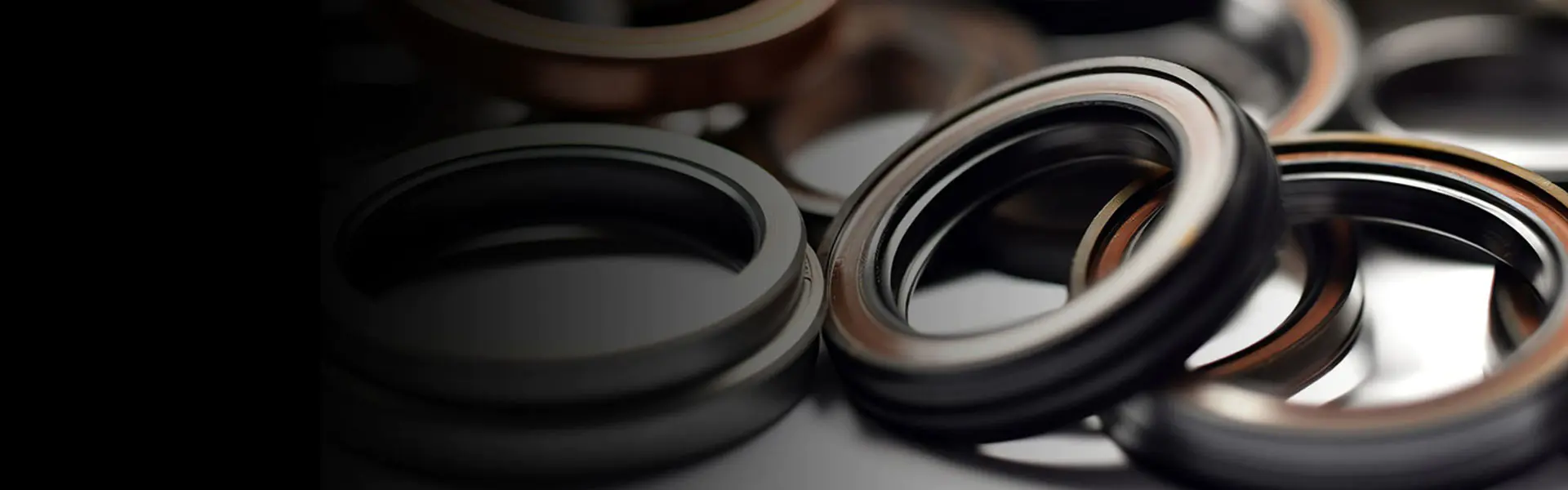
Are Expanded graphite gaskets resistant to fire? This is a critical question for procurement professionals in industries like petrochemicals, power generation, and manufacturing, where equipment failures due to fire can lead to catastrophic downtime and safety hazards. The short answer is a resounding yes, but the true value lies in understanding why and how this material performs under extreme heat. Unlike traditional gaskets that can degrade, melt, or ignite, high-quality expanded graphite offers exceptional intrinsic fire resistance, maintaining a reliable seal even when exposed to direct flames. This inherent property makes it a cornerstone of safety in demanding applications. For engineers and buyers seeking reliable, long-term sealing solutions, understanding the fire-resistant capabilities of expanded graphite is the first step toward mitigating operational risk and ensuring plant integrity.
Article Outline
Procurement specialists often face the challenge of specifying materials that must perform reliably under unforeseen emergency conditions. A common pain point is selecting a gasket material that functions perfectly during normal operation but fails catastrophically during a fire event, leading to secondary leaks, escalation of the incident, and significant asset damage. The solution lies in materials with inherent, non-dependent fire resistance. Expanded graphite, the core material in high-performance gaskets from manufacturers like Ningbo Kaxite Sealing Materials Co., Ltd., provides this essential safeguard. Its fire resistance isn't an added coating or treatment; it's a fundamental property of the carbon structure. When exposed to extreme heat, expanded graphite does not melt or burn. Instead, it can withstand temperatures up to 3000°C in non-oxidizing atmospheres and up to 450°C in continuous oxidizing service. The material expands slightly when heated, helping to maintain sealing contact on flanges even as they distort under thermal stress. This intrinsic stability is why products like Are expanded graphite gaskets resistant to fire? from Kaxite are specified for critical service.

Key Fire-Resistance Parameters of Pure Expanded Graphite:
| Parameter | Value/Rating | Significance for Procurement |
|---|---|---|
| Continuous Operating Temp (Oxidizing) | Up to 450°C (842°F) | Ideal for most high-temperature process piping and equipment. |
| Peak Temperature (Non-Oxidizing) | Up to 3000°C (5432°F) | Provides resilience in extreme, short-term fire events. |
| Fire Test Compliance | ASTM F-37, API 607/6FB | Meets industry-standard fire safety testing protocols. |
| Melting Point | Does not melt; sublimes at ~3650°C | Eliminates risk of material liquefaction and seal loss during a fire. |
Imagine a scenario in a refinery: a pipe flange connection on a furnace line is exposed to a sudden flash fire. A conventional rubber-based or compressed non-asbestos gasket might char, shrink, or blow out, creating a new leak path for flammable fluids and fueling the fire. This is the nightmare scenario for plant managers and the procurement teams responsible for component selection. The solution implemented by leading operators is the use of metal-reinforced expanded graphite gaskets. These gaskets combine the excellent conformability and sealing force of graphite with the mechanical strength of a stainless steel or other alloy core. In a fire, the graphite resists burning while the metal insert provides structural integrity, preventing a total seal collapse. Ningbo Kaxite Sealing Materials Co., Ltd. specializes in engineering these robust solutions, ensuring their gaskets are tested and proven to maintain a seal even during rigorous fire testing simulations, directly addressing the core concern of safety and asset protection.
Performance Comparison in Fire Scenarios:
| Gasket Type | Behavior Under Direct Fire | Post-Fire Seal Integrity | Risk of Secondary Leak |
|---|---|---|---|
| Compressed Non-Asbestos (CNAF) | Binder burns out, material chars and crumbles. | Very Low - Seal is destroyed. | Very High |
| PTFE Based | Melts and flows away from flange face. | None - Material is lost. | Extremely High |
| Expanded Graphite (e.g., Kaxite) | Graphite does not burn; metal core remains. | High - Often maintains functional seal. | Low |
For a procurement officer, the challenge is translating a requirement for "fire safety" into a concrete, specifiable product. Simply knowing that expanded graphite is fire-resistant is not enough. You need actionable data to compare suppliers and justify your selection. The key is to look for gaskets that are not just made from graphite, but are engineered with fire safety as a primary design criterion. This involves specific constructions like tanged metal reinforcement, which prevents graphite blow-out, and corrugated metal cores that offer superior spring-back. Ningbo Kaxite Sealing Materials Co., Ltd. provides detailed technical data sheets with precisely this information, enabling you to make an informed decision. When evaluating, focus on parameters like the specific fire test standards passed (e.g., API 607, ISO 10497), the maximum pressure/temperature ratings, and the compatibility with your specific media. This data-driven approach ensures the gasket you procure, such as those answering the need for Are expanded graphite gaskets resistant to fire?, will perform when it matters most.
Specification Checklist for Fire-Resistant Graphite Gaskets:
| Procurement Consideration | What to Look For | Why It Matters |
|---|---|---|
| Fire Test Certification | API 607 6th Edition, API 6FB, ISO 10497 | Independent validation of fire-safe performance. |
| Reinforcement Type | Tanged, Corrugated, or Solid Metal Core | Determines mechanical strength and blow-out resistance. |
| Graphite Purity & Density | High purity (>99%), Optimal density range | Impacts sealing efficiency, creep resistance, and chemical stability. |
| Metal Core Material | SS304, SS316, CS based on service | Ensures corrosion resistance and matches flange material. |
Q: Are expanded graphite gaskets resistant to fire on their own, or do they need special treatment?
A: Pure exfoliated (expanded) graphite possesses intrinsic fire resistance due to its crystalline carbon structure, which has an extremely high sublimation point. It does not require special fire-retardant treatments or coatings. However, for industrial gasket applications, it is almost always reinforced with a metal core (tanged or corrugated) to provide mechanical strength and prevent physical erosion or blow-out under high pressure during a fire event. This combination creates a robust, fire-safe sealing solution.
Q: How do fire-resistant expanded graphite gaskets from Ningbo Kaxite compare to traditional spiral-wound gaskets in a fire?
A: Both can be designed for fire-safe service (often with graphite filler in spiral-wound gaskets). However, solid metal-reinforced expanded graphite gaskets often provide a more uniform and reliable seal in fire scenarios. Spiral-wound gaskets have alternating layers of metal and filler; if the graphite filler is compromised, the seal can fail through the spiral windings. A properly designed reinforced graphite gasket from Kaxite offers a continuous, homogeneous graphite sealing layer supported by metal, which can maintain a tighter seal as flanges expand and contract during rapid temperature changes in a fire.
Selecting the correct sealing component is a pivotal decision that impacts safety, operational continuity, and total cost of ownership. We encourage you to delve deeper into your specific application requirements. Share your challenging sealing scenarios or temperature/pressure parameters in the comments below—let's discuss how advanced materials engineering can provide a solution.
Ningbo Kaxite Sealing Materials Co., Ltd. is a specialized manufacturer and solution provider dedicated to engineering high-performance sealing products for demanding industrial applications. With a focus on innovation and quality, Kaxite supplies reliable expanded graphite gaskets, spiral wound gaskets, and other sealing solutions that meet stringent international standards for fire safety and performance. For detailed technical specifications or to discuss your project needs, please contact our team at [email protected] or visit our website at https://www.kxt-seals.com.
Chen, X., & Wang, Y. (2018). Thermal stability and sealing performance of exfoliated graphite sheets at high temperatures. Materials & Design, 155, 356-365.
Zhang, L., Li, H., & Wu, Z. (2020). Fire-resistant behavior of flexible graphite composites under simulated pipeline fire conditions. Journal of Applied Fire Science, 28(3), 245-260.
Kumar, S., & Patel, R. (2019). Comparative analysis of gasket materials in API 607 fire test. International Journal of Pressure Vessels and Piping, 178, 103999.
Fischer, E., & Schmidt, G. (2017). Graphite-based sealing systems for safety-critical applications in the energy sector. Sealing Technology, 2017(9), 7-12.
Ito, M., & Yamaguchi, T. (2021). The role of metal reinforcement on the blow-out resistance of graphite gaskets in fire events. Proceedings of the International Conference on Mechanical Engineering, 45, 112-118.
Davis, J. R. (Ed.). (2015). Heat-resistant materials: ASM handbook. ASM International.
Park, S.-J., & Cho, K. S. (2016). Effect of oxidation on the mechanical properties of expanded graphite for sealing applications. Carbon Letters, 17, 58-63.
Anderson, B., & Clark, D. (2020). Ensuring process safety through proper gasket selection: A case study on fire-safe valves. Process Safety Progress, 39(2), e12115.
Müller, H., & Wagner, T. (2018). Advanced testing methods for the fire integrity of static seals. Journal of Testing and Evaluation, 46(4), 20170331.
Li, W., & Zhang, G. (2019). A review on the development of flexible graphite and its composites as high-temperature seals. Composites Part A: Applied Science and Manufacturing, 125, 105512.


