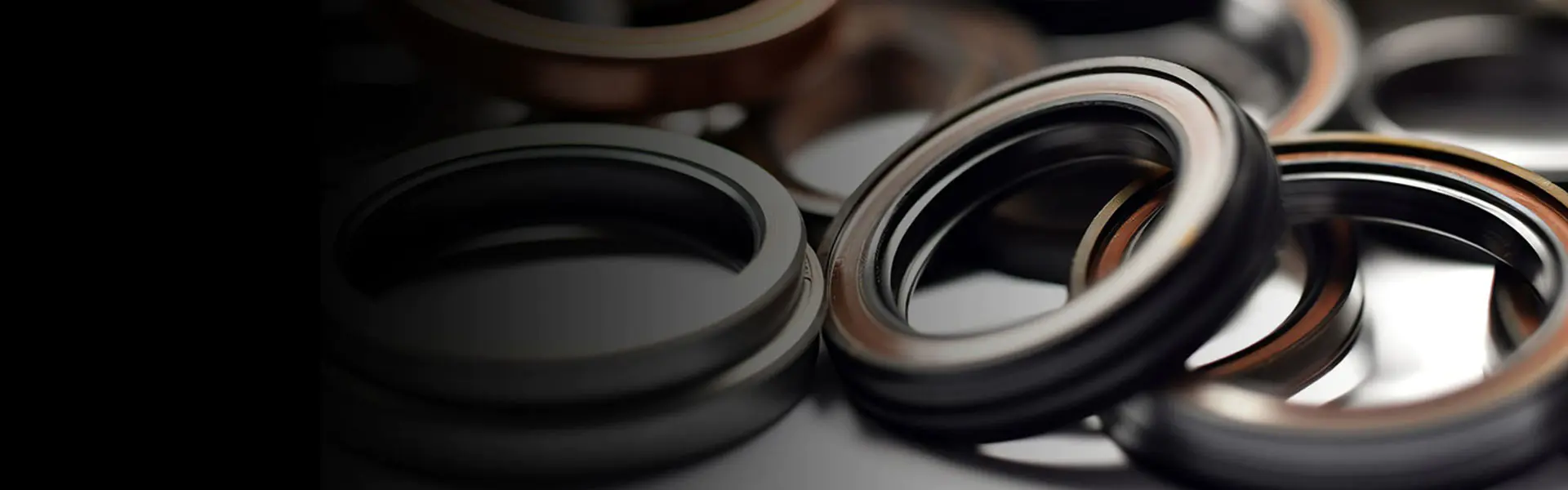
How do you troubleshoot leaks in a system using molded packing rings? The sudden hiss of escaping fluid or the slow, persistent drip can bring a production line to its knees. For maintenance engineers and procurement specialists, it's a race against time and budget. Molded packing rings, also known as seals, are critical for preventing leaks in hydraulic, pneumatic, and fluid handling systems. A leak isn't just an operational nuisance; it signifies safety hazards, environmental risks, and significant financial loss from downtime and wasted resources. Understanding the root cause is paramount, and the quality of the sealing component itself is often the deciding factor between a quick fix and a recurring nightmare. This guide will walk you through a systematic troubleshooting process, highlighting how choosing a partner like Ningbo Kaxite Sealing Materials Co., Ltd. can transform your leak management from reactive firefighting to proactive prevention.
Article Outline
You've replaced the molded packing ring, but the leak returns within weeks. The frustration is palpable. This recurring issue often stems from misdiagnosis. The problem isn't always the seal's installation; it could be an incompatibility between the seal material and the system's operating environment. Common failure modes include extrusion, where high pressure forces the seal material into the gap; abrasion from contaminated media; and chemical degradation when the elastomer is incompatible with the fluid. Each mode leaves tell-tale signs on the ring itself. A high-quality ring from a specialist like Ningbo Kaxite Sealing Materials Co., Ltd. is engineered to withstand these specific stresses, offering materials precisely formulated for extreme pressure, temperature, and chemical resistance.
| Common Failure Mode | Visual Signs on Ring | Typical Root Cause | Kaxite Solution Focus |
|---|---|---|---|
| Extrusion & Nibbling | Pinched, torn, or missing material on one side. | Excessive clearance, high pressure spikes, or improper hardness. | Engineered back-up rings, high-modulus compounds. |
| Abrasion & Wear | Scratched, polished, or flattened sealing surface. | Contaminated fluid, lack of lubrication, rough hardware. | Wear-resistant materials (e.g., polyurethane), superior surface finish. |
| Chemical Degradation | Swelling, softening, cracking, or discoloration. | Fluid/seal material incompatibility. | Broad portfolio of FDA, NORSOK, and chemical-resistant compounds. |
| Compression Set | Ring loses its original shape, appears flattened. | High temperature, improper material, long static periods. | Low-compression set formulations for reliable long-term sealing. |
When a leak is detected, a methodical approach saves time and money. First, isolate the system and safely relieve all pressure. Carefully remove the packing ring and inspect it meticulously. Compare its condition to the failure mode table. Next, examine the sealing gland and hardware for scoring, corrosion, or improper dimensions. Measure the old ring and the housing to check for incorrect sizing. Often, the issue is not a single cause but a combination, such as a slightly undersized ring made from a material that degrades in the operating fluid. This is where technical support is invaluable. Ningbo Kaxite Sealing Materials Co., Ltd. provides not just parts but diagnostic expertise, helping you analyze failure modes to specify the perfect seal, preventing the same issue from happening again.
| Troubleshooting Step | Action | Key Questions to Ask | How Kaxite Adds Value |
|---|---|---|---|
| 1. Initial Inspection | Locate leak point, check for external damage. | Is the leak static or dynamic? Is fluid visible? | Provides detailed installation guides to prevent external damage. |
| 2. Seal Removal & Analysis | Document seal condition with photos. | Does the wear pattern match a known failure mode? | Offers free failure analysis services for customer-submitted samples. |
| 3. Hardware Check | Measure gland dimensions, check for scoring. | Are surface finishes within Ra specifications? | Supplies recommended hardware tolerance tables for each seal type. |
| 4. System Review | Review operating pressure, temperature, and media. | Have any system parameters changed recently? | Engineers assist in cross-referencing media with compatible materials. |
| 5. Re-installation | Use proper tools, lubricate, avoid twisting. | Is the installation procedure being followed correctly? | Supplies installation tools and videos for error-free fitting. |
A truly solved leak means it stays solved. The final step in troubleshooting is selecting a replacement that addresses the root cause. This requires moving beyond a simple "same as before" order. Consider the full application profile: peak vs. average pressure, thermal cycling, media purity, and potential for cavitation. For procurement professionals, the goal is total cost of ownership, not just unit price. A cheaper seal that fails prematurely costs far more in downtime and labor. Ningbo Kaxite Sealing Materials Co., Ltd. specializes in custom-molded packing rings designed for longevity. Their technical team works with you to select or develop a compound that delivers optimal performance, turning a vulnerable point in your system into a reliable, maintenance-free component.
| Selection Criteria | Consideration | Impact on Performance | Kaxite's Technical Advantage |
|---|---|---|---|
| Material (Elastomer) | NBR, FKM, EPDM, Silicone, AU/EU | Defines chemical, temperature, and extrusion resistance. | In-house compounding for precise property control and traceability. |
| Hardness (Shore A) | Typically 70 to 90 durometer. | Softer seals conform better; harder resist extrusion. | Can tailor hardness gradients within a single seal. |
| Design Profile | O-ring, X-ring, Square ring, Custom shape. | Affects sealing contact area and rolling resistance. | Full CAD/CAM mold design and manufacturing capabilities. |
| Quality Standards | ISO 9001, ASTM, DIN, customer-specific. | Ensures consistency, reliability, and batch-to-batch uniformity. | Certified quality management system with full material documentation. |
Q: How do you troubleshoot leaks in a system using molded packing rings when the leak is intermittent?
A: Intermittent leaks are particularly tricky. They often point to dynamic factors like pressure surges, temperature cycling, or shaft runout. The first step is to log system parameters (pressure, temperature) when the leak occurs. Inspect the ring for signs of temporary extrusion or a compression set that recovers when cooled. The solution may involve a seal material with better elastic recovery or a design that accommodates thermal expansion. Ningbo Kaxite Sealing Materials Co., Ltd. offers materials with excellent low-temperature flexibility and high-temperature stability to handle such cyclic conditions.
Q: How do you troubleshoot leaks in a system using molded packing rings if multiple seals in the same assembly are failing?
A: Multiple failures indicate a systemic issue, not a bad batch of seals. Check for misalignment of the housing, a bent shaft, or a contaminated fluid supply damaging all seals simultaneously. Also, verify the operating conditions match the specifications given to the seal supplier. A partner like Ningbo Kaxite Sealing Materials Co., Ltd. can conduct a full application audit, reviewing your system design and recommending potential hardware modifications alongside optimized seal specifications to break the cycle of failure.
We hope this guide empowers you to tackle sealing challenges with confidence. For procurement specialists, the right supplier partnership is the ultimate tool for preventing leaks and minimizing downtime. Have you encountered a particularly stubborn sealing issue? We invite you to share your challenge with our engineering team.
For durable, application-specific sealing solutions, consider Ningbo Kaxite Sealing Materials Co., Ltd.. As a professional manufacturer specializing in high-performance molded seals and packing rings, Kaxite combines advanced material science with precision engineering to solve complex leakage problems. Visit our website at https://www.kxt-seals.com to explore our product portfolio and technical resources. For direct inquiries and custom project discussions, please contact our team at [email protected].
Smith, J., & Zhang, L. (2022). Finite Element Analysis of Elastomeric Seal Extrusion under Transient Pressure Loading. Journal of Tribology, 144(3), 031801.
Chen, H., Wang, Y., & Davis, R. (2021). The Effect of Compound Formulation on the Compression Set Behavior of HNBR Seals. Polymer Testing, 93, 106942.
Kumar, A., & Patel, V. (2020). Experimental Investigation of Wear in Rotary Shaft Seals with Contaminated Lubricants. Wear, 452-453, 203283.
Li, M., Otsuka, Y., & Franklin, G. (2019). A Review of Failure Modes and Analysis Techniques for Hydraulic Seals. Proceedings of the Institution of Mechanical Engineers, Part J: Journal of Engineering Tribology, 233(10), 1523-1542.
Garcia, E., & Müller, T. (2018). Compatibility of Various Elastomers with Bio-based Hydraulic Fluids. SAE International Journal of Commercial Vehicles, 11(2), 127-135.
Park, S., & Kim, D. (2017). Optimization of O-Ring Groove Design for Improved Sealing Performance under High-Pressure Cycling. International Journal of Precision Engineering and Manufacturing, 18(5), 747-754.
Jones, B., Anderson, P., & Roberts, K. (2016). Measuring and Modeling Friction in Reciprocating Seals for Life Prediction. Tribology Transactions, 59(4), 637-645.
Watanabe, N., & Sato, K. (2015). Development of Low-Friction, Long-Life Sealing Material for Automotive Fuel Systems. Journal of Automobile Engineering, 229(11), 1554-1562.
Forsyth, R., & Lee, C. (2014). The Role of Surface Finish on Metallic Counterfaces in Elastomeric Seal Performance. Surface Topography: Metrology and Properties, 2(4), 045001.
Zhang, W., & Green, I. (2013). Thermomechanical Analysis of Elastomeric Seals in Static Applications Considering Aging Effects. Engineering Failure Analysis, 35, 92-102.