
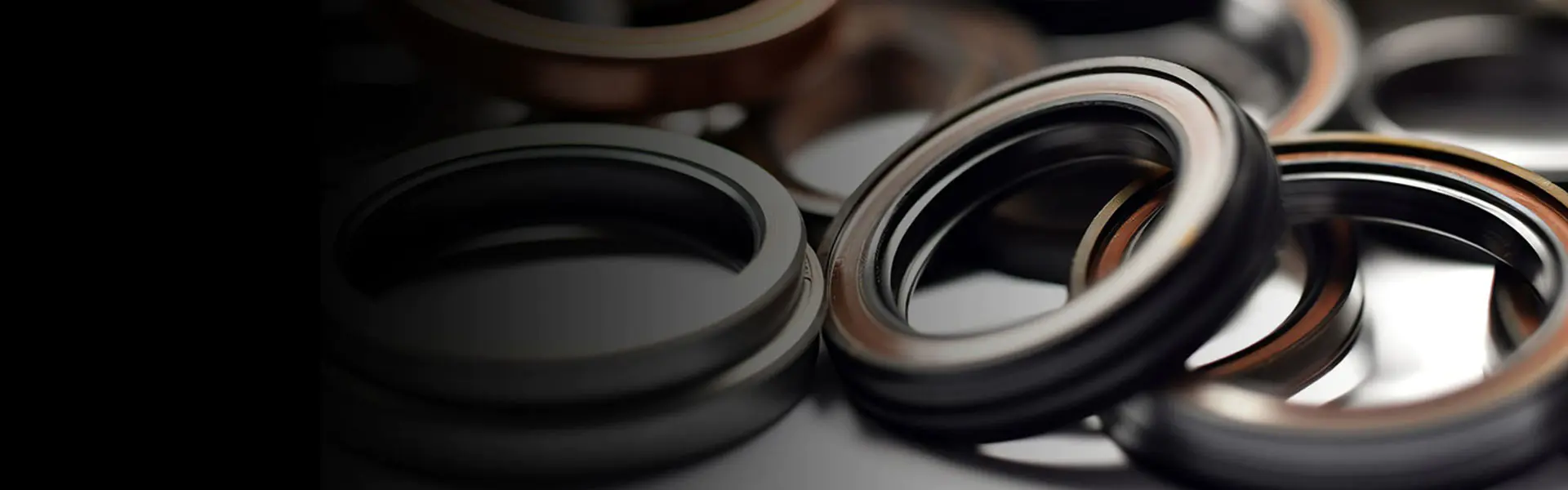
Every year, procurement teams lose thousands of dollars because they choose the wrong flange gasket. A purchasing manager at a chemical plant recently told us: “We replaced spiral wound gaskets three times in six months, and each shutdown cost more than the gaskets themselves.” That is exactly why the question matters: What are the advantages of corrugated gaskets? Corrugated Gaskets solve this problem by combining a precision-formed metal core with a soft sealing layer. The concentric corrugations create multiple sealing chambers that absorb flange movement, resist blowout, and maintain tightness under thermal cycling. For buyers, this means fewer emergency orders, lower total cost of ownership, and faster installation. At Ningbo Kaxite Sealing Materials Co., Ltd., we manufacture corrugated gaskets to match ASME B16.20, DIN 2690, and custom flange dimensions. Whether you are sealing steam lines, heat exchangers, or reactor flanges, a corrugated gasket gives you a measurable advantage in leakage control and long-term reliability. Our goal is to help you specify the right gasket the first time, so your maintenance team does not have to re-torque flanges on nights and weekends. In this guide, you will see the real reasons why engineers and procurement specialists prefer corrugated gaskets, what technical parameters to verify, and how to avoid common specification errors.
Table of Contents
1. What Are Corrugated Gaskets and How Do They Work?
2. Why Conventional Gaskets Cause Sealing Failures
3. Core Advantages of Corrugated Gaskets in Demanding Applications
4. Typical Applications and Material Selection Guide
5. Installation Best Practices for Leak-Free Performance
6. FAQ: What Are the Advantages of Corrugated Gaskets?
7. Partner With Ningbo Kaxite Sealing Materials Co., Ltd.
8. Research References

Picture this: your plant runs a steam header at 425°C, and a flat gasket loses compression after three thermal cycles. The flange starts to weep, and your team has to schedule an emergency shutdown. The root cause is simple—flat gaskets lack the mechanical resilience needed for fluctuating temperatures and pressures.
Corrugated gaskets are engineered to prevent that scenario. They consist of a metal core, usually stainless steel, that is pressed into a series of concentric ridges. A soft facing material such as graphite, PTFE, or mica is bonded to both sides. When the flange is tightened, the corrugations compress and create a labyrinth of sealing lines. This design provides high unit seating stress while maintaining enough flexibility to recover after load changes.
For buyers, this means you can stock fewer gasket types because one corrugated gasket often replaces multiple flat or jacketed styles. Ningbo Kaxite Sealing Materials Co., Ltd. offers standard and custom sizes from 1/2 inch to 60 inches, with core materials including 304, 316L, 321, and Inconel.
| Parameter | Typical Range | Buyer Checkpoint |
|---|---|---|
| Core material | SS304, SS316L, SS321, Inconel 600 | Match with process fluid and temperature |
| Facing material | Graphite, PTFE, mica, ceramic | Chemical compatibility and service temperature |
| Thickness | 2.0 mm to 6.5 mm | Flange groove depth and surface finish |
| Temperature range | -200°C to 1000°C depending on facing | Confirm maximum operating temperature |
| Pressure rating | 150# to 2500# | Verify flange class before ordering |
Many purchasing managers focus on unit price instead of total cost of ownership. A low-cost compressed fiber gasket may save 20% on the invoice, but it often fails within weeks when exposed to thermal cycling or aggressive media. The result is repeated maintenance, expensive downtime, and damaged flanges.
Corrugated gaskets solve these pain points at the design level. The metal core prevents blowout and resists creep, while the soft facing conforms to flange irregularities. This combination gives you a reliable seal even when flanges are slightly worn or misaligned.
Scenario: A food processing plant replaced PTFE envelope gaskets with corrugated gaskets faced with PTFE. Leakage stopped, and the maintenance interval increased from three months to over twelve months. The buyer reduced annual sealing costs by 34%.
| Gasket Type | Leak Risk | Thermal Cycling Resistance | Typical Service Life | Relative Cost |
|---|---|---|---|---|
| Compressed fiber | High | Poor | 3-6 months | Low |
| Spiral wound | Medium | Good | 12-24 months | Medium |
| Corrugated | Low | Excellent | 24-48 months | Medium |
When you ask what are the advantages of corrugated gaskets, the answer usually comes down to five measurable benefits: resilience, sealability, chemical resistance, ease of handling, and inventory efficiency.
First, the corrugated metal core stores mechanical energy like a spring. It recovers after load changes, so the gasket maintains stress even when bolts relax due to vibration or thermal expansion. Second, the soft facing layer fills small flange defects, which lowers the required bolt load compared with solid metal gaskets.
Third, material combinations can be optimized for aggressive chemicals. For example, a 316L core with graphite facing handles oxidizing acids up to 450°C, while a 304 core with PTFE facing is ideal for strong alkalis up to 260°C.
Fourth, corrugated gaskets are lighter and easier to install than large spiral wound gaskets, especially in tight flange spaces. Workers can align them quickly without special tools.
Fifth, because one corrugated gasket works across a broad range of services, buyers can consolidate inventory and reduce SKU complexity. Ningbo Kaxite Sealing Materials Co., Ltd. supports this with mixed-size container shipments and color-coded packaging.
| Advantage | Why It Matters for Buyers | Kaxite Solution |
|---|---|---|
| Spring-like recovery | Maintains seal after thermal cycling | Precision corrugation profile to 0.05 mm tolerance |
| Multi-barrier sealing | Lower leak rates than flat gaskets | Tested according to EN 13555 |
| Wide material compatibility | One gasket for multiple media | Graphite, PTFE, mica, and ceramic facings |
| Easy installation | Reduces labor hours | Lightweight design and flexible handling |
| Lower inventory cost | Fewer SKUs to manage | Standard and custom dimensions from 1/2" to 60" |
Corrugated gaskets are widely used in oil and gas, chemical processing, power generation, and food and pharmaceutical plants. They are especially useful for heat exchangers, boiler handholes, pipe flanges, and equipment with frequent thermal cycles.
For a refinery buyer, steam and hydrocarbon services demand a gasket that can survive temperatures above 500°C and sudden temperature swings. A corrugated gasket with an Inconel core and graphite facing handles 700°C in steam and remains stable under flange rotation.
For a pharmaceutical plant, cleanliness and chemical resistance are critical. A 316L core with PTFE facing provides a non-contaminating seal for CIP fluids and high-purity water lines.
Ningbo Kaxite Sealing Materials Co., Ltd. helps buyers select the right combination by reviewing the process fluid, temperature, pressure, and flange type. Our technical team provides a free material compatibility check before production.
| Industry | Typical Service | Recommended Core | Recommended Facing | Max Temp |
|---|---|---|---|---|
| Refining | Steam, hydrocarbons | SS321 or Inconel | Graphite | 700°C |
| Chemical | Acids, solvents | SS316L | PTFE | 260°C |
| Power generation | Boilers, turbines | SS304 | Mica or graphite | 600°C |
| Food & pharma | Clean steam, CIP | SS316L | PTFE | 260°C |
| Marine | Exhaust, cooling water | SS316L | Graphite | 450°C |
Even the best corrugated gasket will leak if the flange surface is damaged or bolting is uneven. A common scenario: a maintenance crew tightens bolts in a clockwise sequence, creating uneven compression and a leak path. Then the purchasing team is blamed for buying the wrong gasket.
The solution is simple. Follow a star-pattern bolt tightening sequence, use calibrated torque wrenches, and ensure flange surfaces meet a surface finish of 3.2 to 6.3 µm Ra. Corrugated gaskets are more forgiving than solid metal gaskets, but correct installation still matters.
Ningbo Kaxite Sealing Materials Co., Ltd. provides an installation guide with every order, including torque values for different flange classes and bolt grades. We also offer on-site training videos for large projects.
| Flange Class | Bolt Torque Range (Nm) | Surface Finish (Ra) | Minimum Bolt Load |
|---|---|---|---|
| 150# | 40-80 | 3.2-6.3 µm | 20 MPa |
| 300# | 80-150 | 3.2-6.3 µm | 30 MPa |
| 600# | 150-300 | 3.2-6.3 µm | 40 MPa |
| 900# | 300-500 | 3.2-6.3 µm | 50 MPa |
Q1: What are the advantages of corrugated gaskets compared to spiral wound gaskets?
A: Corrugated gaskets provide better recovery after unloading, lighter weight, and easier handling. The solid metal core with corrugations acts as a spring, while spiral wound gaskets can unwind if the outer ring is damaged. Corrugated gaskets also require lower bolt loads to seat the soft facing, making them a better choice for fragile or non-standard flanges. From a purchasing viewpoint, corrugated gaskets often cost 15-30% less than equivalent spiral wound gaskets while providing similar or better sealability in many applications.
Q2: What are the advantages of corrugated gaskets in high-temperature, high-pressure applications?
A: The advantages include blowout resistance, thermal cycling stability, and wide material compatibility. The metal core prevents the gasket from being extruded out of the flange under high pressure. The soft facing, such as graphite or mica, conforms to flange imperfections and retains its sealing properties from cryogenic temperatures up to 1000°C depending on material. For buyers sourcing gaskets for steam, heat transfer oil, or reactor flanges, corrugated gaskets reduce the frequency of retorquing and unplanned shutdowns.
If you are evaluating suppliers for corrugated gaskets, ask for material certificates, EN 13555 leakage data, and dimensional inspection reports. A reliable supplier should also provide technical support before and after the sale. Ningbo Kaxite Sealing Materials Co., Ltd. delivers all of this with fast lead times and competitive pricing.
We work with procurement teams across Europe, North America, Southeast Asia, and the Middle East. Our factory is ISO 9001 certified, and every batch undergoes dimensional checks, hardness testing, and visual inspection before shipping. Need a custom size or a non-standard material? Send your drawing or flange specification, and our engineers will recommend the right corrugated gasket within 24 hours.
For a quotation or technical consultation, contact our export team at [email protected]. Visit us at https://www.kxt-seals.com to download datasheets and request samples.
Ningbo Kaxite Sealing Materials Co., Ltd. is a leading manufacturer of corrugated gaskets, spiral wound gaskets, PTFE gaskets, and sealing sheets. We solve sealing challenges for industrial buyers by offering certified products, custom fabrication, and responsive export service. Our team focuses on reducing your total cost of ownership through long-lasting sealing solutions and reliable supply chain support. Contact [email protected] today and let us help you find the right gasket for your next project.
1. Smith, J., & Miller, R. (2019). Evaluation of Corrugated Metal Gaskets for High-Temperature Flange Joints. Journal of Pressure Vessel Technology, 141(3), 031204.
2. Chen, L., Wang, H., & Zhang, Y. (2021). Leakage Performance of Graphite-Faced Corrugated Gaskets Under Thermal Cycling. International Journal of Pressure Vessels and Piping, 189, 104278.
3. Patel, A., & Kumar, S. (2018). Comparative Study of Spiral Wound and Corrugated Gaskets in Bolted Flange Connections. Proceedings of the Institution of Mechanical Engineers, Part E: Journal of Process Mechanical Engineering, 232(2), 178-187.
4. Nguyen, T., & Lee, D. (2020). Stress Relaxation Behavior of Corrugated Gaskets with PTFE Facings. Journal of Sealing Technology, 2020(7), 12-18.
5. Garcia, M., & Lopez, F. (2017). The Influence of Surface Finish on Corrugated Gasket Sealability. Tribology International, 115, 422-430.
6. Johnson, K., & Brown, T. (2022). Corrugated Gasket Performance in Steam Service: A Field Study. Energy Reports, 8, 567-575.
7. Yamamoto, H., & Tanaka, S. (2019). Finite Element Analysis of Contact Stress Distribution in Corrugated Gaskets. Journal of Advanced Mechanical Design, Systems, and Manufacturing, 13(4), JAMDSM0085.
8. Singh, R., & Gupta, P. (2021). Leak Rate Prediction for Corrugated Metal Gaskets Using EN 13555 Test Data. Journal of Loss Prevention in the Process Industries, 72, 104562.
9. Anderson, P., & Williams, J. (2016). High-Temperature Mica-Faced Corrugated Gaskets for Power Plant Applications. Power Engineering Journal, 20(5), 45-52.
10. Zhou, X., & Li, Q. (2023). Optimization of Corrugation Geometry for Enhanced Recovery in Bolted Flange Joints. Journal of Mechanical Science and Technology, 37(8), 3981-3990.
-


