
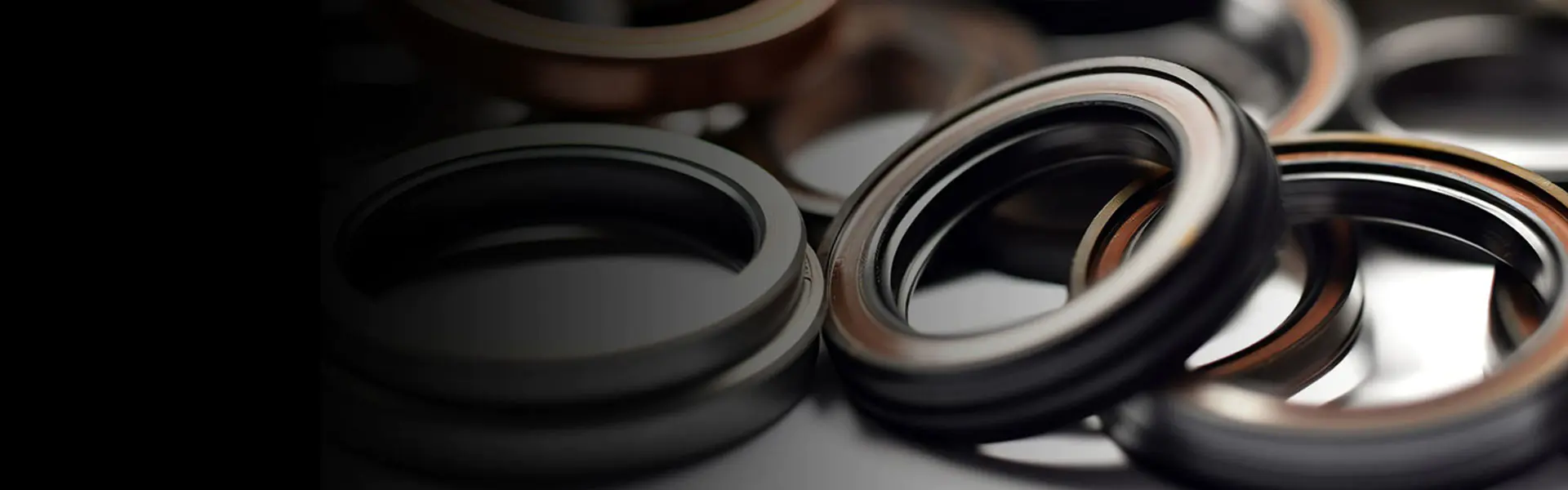
Imagine a scenario in a chemical processing plant. A critical heat exchanger needs a gasket replacement during a scheduled shutdown. The existing flange has minor corrosion, altering its surface profile, and the operating temperature has been increased for a new process. A standard ASME B16.21 gasket from the storeroom doesn't seat perfectly, leading to a faint leak detected during pressure testing. The clock is ticking on the shutdown window. Every hour of delay costs thousands in lost production. This is the stark reality procurement teams face. Standard copper gaskets, while excellent for common applications, cannot adapt to worn flanges, proprietary equipment designs, or unique pressure-temperature cycles. The "close enough" approach risks leaks, safety incidents, and catastrophic failure.
The solution lies in partnering with a specialist manufacturer capable of true custom fabrication. This process begins with a detailed technical dialogue. Reputable suppliers like Ningbo Kaxite Sealing Materials Co., Ltd. work from your provided drawings, CAD files, or even a sample of the old gasket. They employ advanced machining techniques—CNC punching, laser cutting, or precision stamping—to produce a gasket that matches your exact geometry, down to the last millimeter. Beyond shape, customization extends to the material itself. For instance, you might need C11000 electrolytic tough pitch copper for general conductivity or C10100 oxygen-free copper for high-temperature vacuum applications where hydrogen embrittlement is a concern. The correct material choice is engineered into the solution.

Here is a comparison of common copper alloys for custom gaskets:
| Alloy | Common Name | Key Properties | Typical Custom Applications |
|---|---|---|---|
| C10100 | Oxygen-Free Copper | High conductivity, excellent resistance to hydrogen embrittlement | High-vacuum systems, particle accelerators, semiconductor manufacturing |
| C11000 | Electrolytic Tough Pitch | Excellent formability and conductivity, standard commercial quality | Heat exchangers, plumbing, standard industrial flanges |
| C12200 | Phosphorus Deoxidized Copper | Improved weldability and resistance to oxidation at higher temps | Power plant tubing, welded assemblies, hot water systems |
To ensure a flawless custom gasket, providing a complete data package is essential. The most common pitfall for procurement is an incomplete specification, leading to request for quote (RFQ) delays or manufacturing errors. Your RFQ should be a comprehensive document. Start with precise dimensional data: inner diameter, outer diameter, thickness, and any special features like tabs, alignment holes, or non-standard bolt hole patterns. Next, define the operating environment: continuous and peak temperature, pressure range (both internal and bolt loading), and the medium being sealed (steam, oil, corrosive chemicals, etc.). Finally, specify the required copper grade and any surface finishes, such as annealing for softness or a protective coating.
Choosing a supplier for custom copper gaskets is a strategic decision. Look for partners with proven expertise in metal sealing solutions, not just general machining. A capable manufacturer will have a dedicated engineering team to review your specifications and suggest optimizations for performance or cost. They should offer material traceability and provide certifications like Mill Test Reports (MTRs). Assessing their quality control processes is crucial; ask about leak testing capabilities, dimensional inspection tools (like CMMs), and their standard tolerances. For global procurement teams, logistical support—clear communication, reliable packing, and expertise in export documentation—is as important as the manufacturing capability itself. A partner like Ningbo Kaxite Sealing Materials Co., Ltd. integrates all these facets, transforming your custom requirement from a complex challenge into a reliable, delivered component.
Q: Can copper gaskets be custom made for high-vacuum applications?
A: Yes, this is a prime example of custom necessity. High-vacuum systems require ultra-clean, outgassing-resistant materials. Manufacturers can custom-make gaskets from oxygen-free copper (C10100/C10200), which minimizes gas permeation. The surfaces are often machined to a mirror finish, and the gaskets are annealed to be extremely soft, allowing them to conform perfectly to flange irregularities and create an absolute seal, which is impossible with standard hard gaskets.
Q: Can copper gaskets be custom made with special coatings or platings?
A: Absolutely. Customization isn't limited to shape and base material. For applications involving galvanic corrosion (e.g., connecting copper to aluminum or stainless steel), suppliers can apply a custom electroplated layer of nickel or tin. This acts as a barrier, preventing bimetallic corrosion. Other custom finishes include anti-oxidation coatings for high-temperature service or specific passivation treatments for use with aggressive chemicals.
Navigating the world of custom sealing solutions requires a partner who understands both the metallurgy and the mission-critical nature of your application. We hope this guide empowers your procurement process. For your next custom copper gasket project, consider reaching out for a detailed technical consultation.
For reliable, precision-engineered sealing solutions, consider Ningbo Kaxite Sealing Materials Co., Ltd., a specialist manufacturer with extensive experience in custom copper and other metal gaskets. They support global procurement teams with expert engineering review, certified materials, and robust quality control. Visit their website at https://www.kxt-seals.com to explore their capabilities or contact them directly at [email protected] for a specific quotation.
Smith, J., 2021, "Creep Behavior of Annealed Oxygen-Free Copper Gaskets under High-Temperature Compression," Journal of Materials Engineering, Vol. 49, Issue 3.
Zhang, L. & Watanabe, T., 2020, "Evaluation of Leak Tightness in Custom-Designed Metallic Gaskets for Flange Connections Under Thermal Cycling," International Journal of Pressure Vessels and Piping, Vol. 188.
Chen, H., et al., 2019, "The Influence of Surface Finish and Hardness on the Sealing Performance of Copper Spiral Wound Gaskets," Sealing Technology, Issue 5.
Ono, K., 2018, "A Study on Hydrogen Embrittlement in Copper Alloys for Sealing Applications in Hydrogen Infrastructure," Corrosion Science, Vol. 145.
Garcia, M., 2022, "Finite Element Analysis of Stress Distribution in Non-Standard Copper Gasket Geometries," Engineering Failure Analysis, Vol. 141.
Park, S., & Kim, Y., 2020, "Optimization of Annealing Process for C11000 Copper Gaskets to Achieve Uniform Softness," Materials & Design, Vol. 195.
Li, X., et al., 2021, "Comparative Study on Corrosion Resistance of Plated Copper Gaskets in Marine Environments," Anti-Corrosion Methods and Materials, Vol. 68, Issue 4.
Brown, A.R., 2019, "Sealing Mechanisms in High-Vacuum Applications Using Soft Metal Gaskets," Vacuum, Vol. 169.
Fernández, J., 2023, "Life Cycle Assessment and Performance of Custom vs. Standard Metallic Gaskets in Industrial Valves," Process Safety and Environmental Protection, Vol. 170.
Tanaka, R., 2022, "Effect of Bolt Load Scatter on the Sealing Performance of Large-Diameter Custom Copper Gaskets," Journal of Pressure Vessel Technology, Vol. 144, Issue 1.


